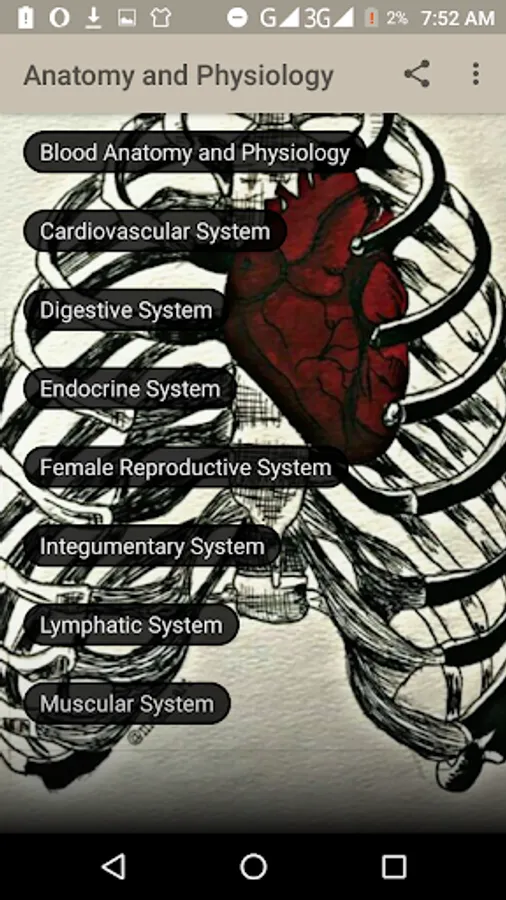
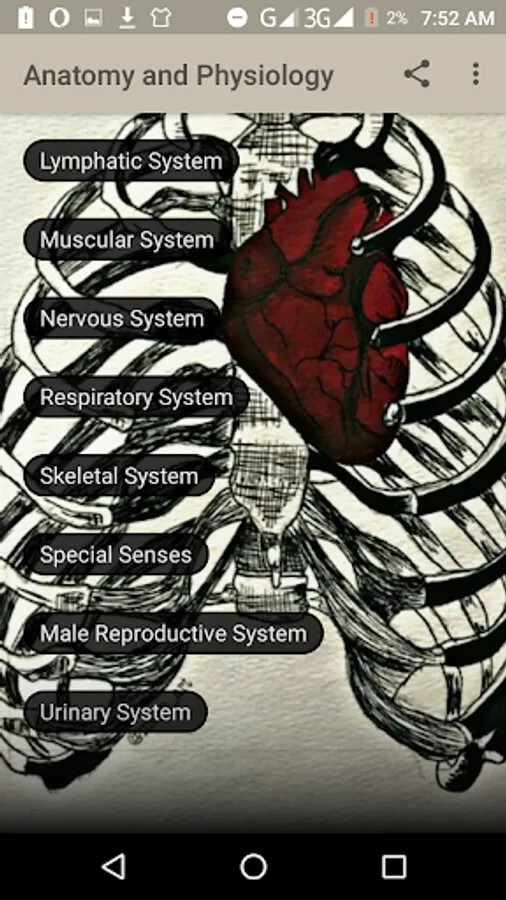
In this educational app, you can explore detailed diagrams and descriptions of human body systems. Includes sections on the respiratory, digestive, circulatory, endocrine, nervous, musculoskeletal, integumentary, lymphatic, reproductive systems, and blood.
AppRecs review analysis
AppRecs rating 4.2. Trustworthiness 0 out of 100. Review manipulation risk 0 out of 100. Based on a review sample analyzed.
★★★★☆
4.2
AppRecs Rating
Ratings breakdown
5 star
62%
4 star
20%
3 star
4%
2 star
4%
1 star
9%
What to know
✓
High user satisfaction
82% of sampled ratings are 4+ stars (4.2★ average)
✓
Authentic reviews
Natural distribution, no red flags
About Anatomy and Physiology
This Application contains the following:
Respiratory System – Allows gas exchange between cells and the environment. Includes trachea and lungs.
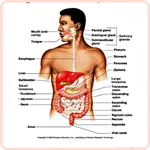
Digestive System/Excretory System – Ingests food and breaks it down into usable nutrients. Excretes solid waste products. Includes the mouth, esophagus, stomach, and intestines.
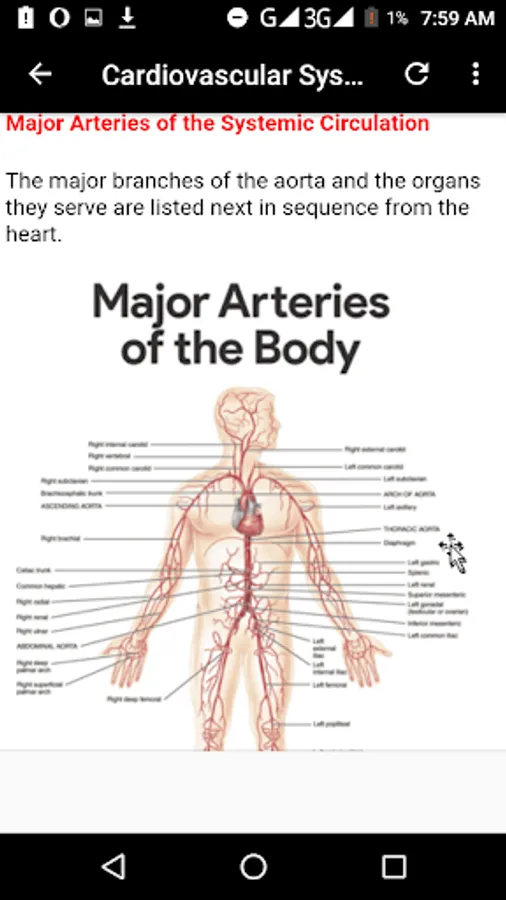
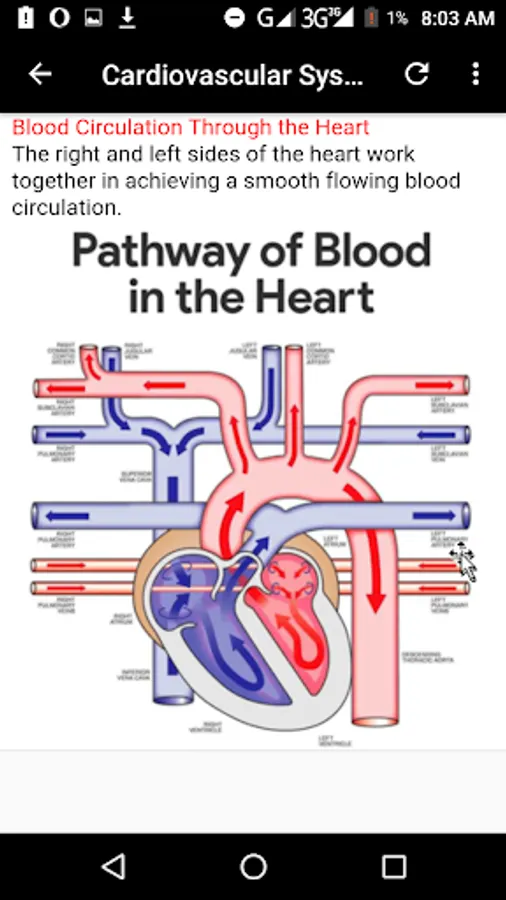
Cardiovascular/Circulatory System – Moves materials between body systems, including oxygen, nutrients, hormones, and waste products. Includes the heart, arteries, and veins.
Renal System/Urinary System – Cleans dissolved waste products from the blood and excretes them. Includes kidneys and bladder.
Endocrine System – Secrets chemical signals that allow body systems to act cooperatively sa needed. Includes hormone-producing tissues of the pineal gland and pituitary gland in the brain; the thyroid gland; the adrenal glands; the pancreas; and the ovaries and testes.
Nervous System – Allows perception, emotion, thought, and rapid response to the environment. Includes brain and nerves.
Musculoskeletal system – Allows the body to move on command.
Integumentary System/Exocrine System – Covers the body and regulates its exchange with the outside world. Includes skin, hair, nails, sweat, and other glands which secrete substances onto the skin.
Lymphatic System/Immune System – Fights infection. Includes lymphatic vessels which permeate the body.
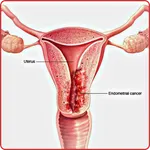
Reproductive System – Allows the production of offspring. Includes ovaries, uterus, mammary glands (breasts), penis, and testes.
Special Senses.
Blood Anatomy and Physiology
Respiratory System – Allows gas exchange between cells and the environment. Includes trachea and lungs.
Digestive System/Excretory System – Ingests food and breaks it down into usable nutrients. Excretes solid waste products. Includes the mouth, esophagus, stomach, and intestines.
Cardiovascular/Circulatory System – Moves materials between body systems, including oxygen, nutrients, hormones, and waste products. Includes the heart, arteries, and veins.
Renal System/Urinary System – Cleans dissolved waste products from the blood and excretes them. Includes kidneys and bladder.
Endocrine System – Secrets chemical signals that allow body systems to act cooperatively sa needed. Includes hormone-producing tissues of the pineal gland and pituitary gland in the brain; the thyroid gland; the adrenal glands; the pancreas; and the ovaries and testes.
Nervous System – Allows perception, emotion, thought, and rapid response to the environment. Includes brain and nerves.
Musculoskeletal system – Allows the body to move on command.
Integumentary System/Exocrine System – Covers the body and regulates its exchange with the outside world. Includes skin, hair, nails, sweat, and other glands which secrete substances onto the skin.
Lymphatic System/Immune System – Fights infection. Includes lymphatic vessels which permeate the body.
Reproductive System – Allows the production of offspring. Includes ovaries, uterus, mammary glands (breasts), penis, and testes.
Special Senses.
Blood Anatomy and Physiology
Anatomy and Physiology Screenshots
Tap to Rate: