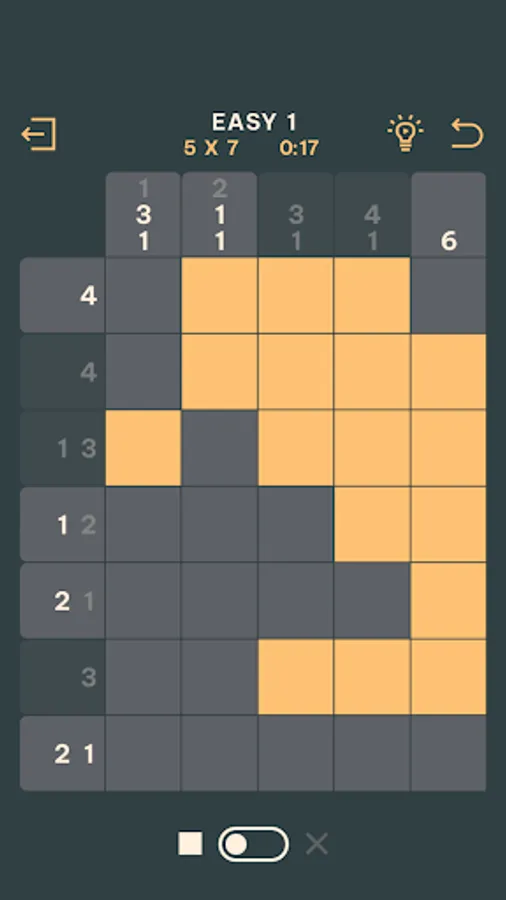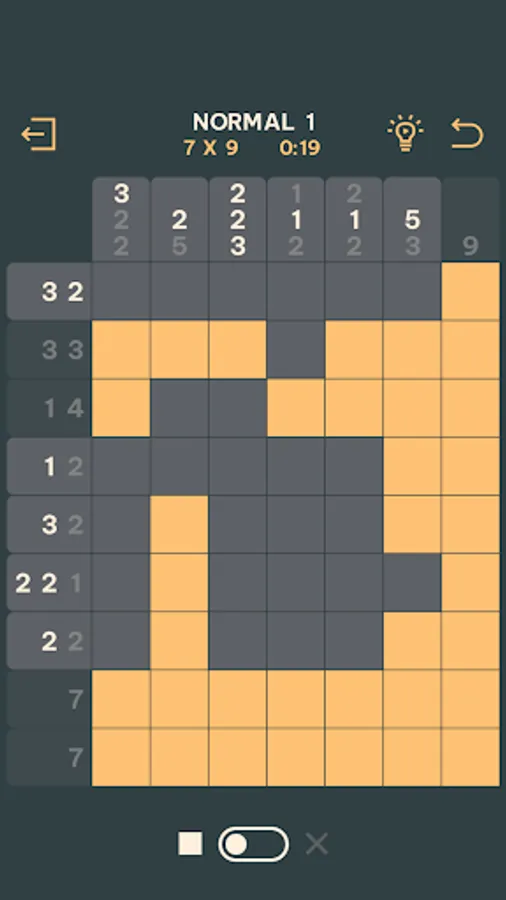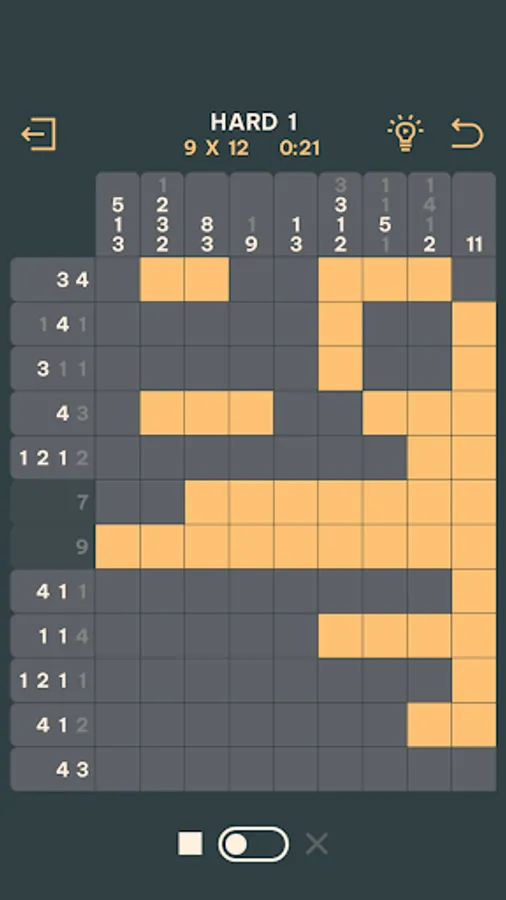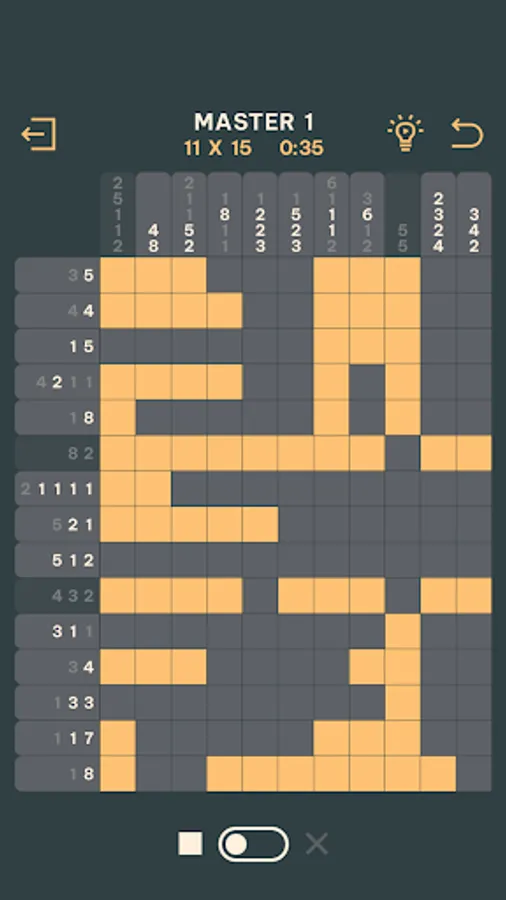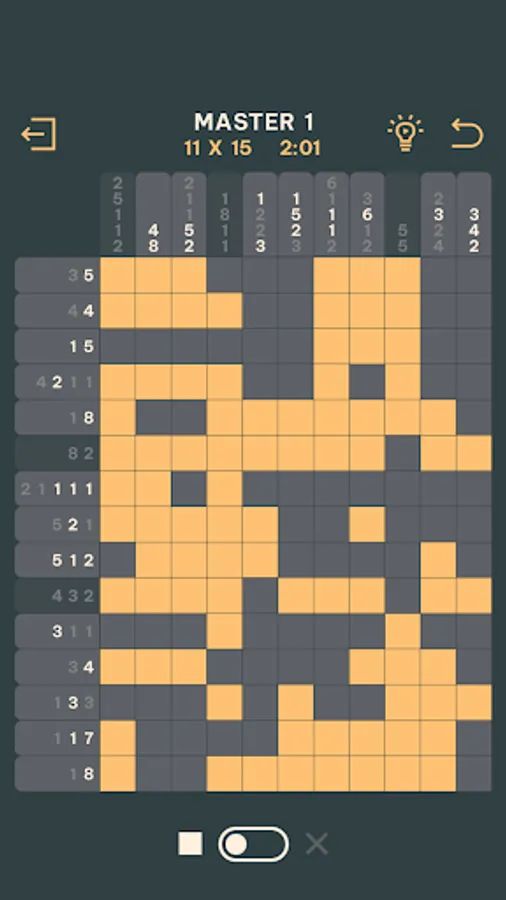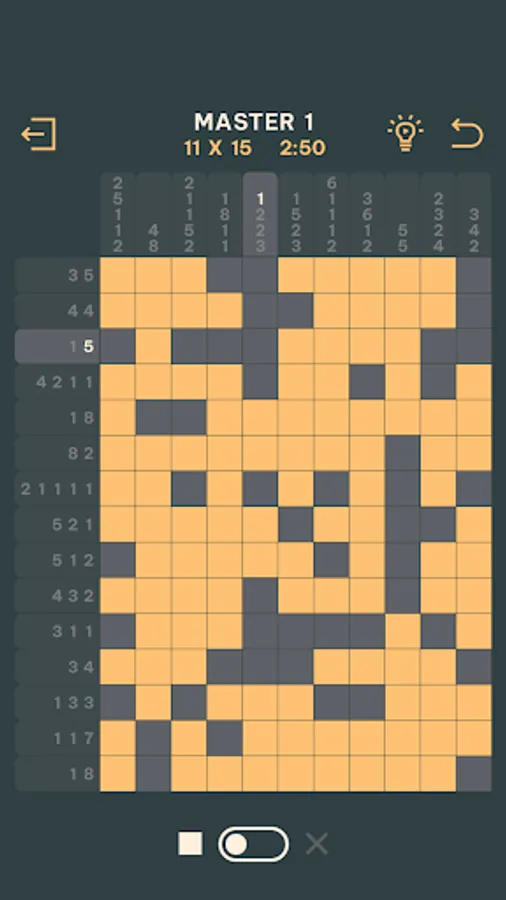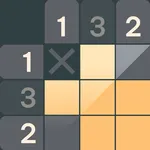
In this puzzle app, you can solve grid-based picture logic challenges by filling in cells based on numeric clues and revealing hidden images. Includes multiple puzzle sizes and color options for varied complexity.
AppRecs review analysis
AppRecs rating 4.0. Trustworthiness 76 out of 100. Review manipulation risk 25 out of 100. Based on a review sample analyzed.
★★★★☆
4.0
AppRecs Rating
Ratings breakdown
5 star
59%
4 star
18%
3 star
0%
2 star
6%
1 star
18%
What to know
✓
Low review manipulation risk
25% review manipulation risk
✓
Credible reviews
76% trustworthiness score from analyzed reviews
✓
Good user ratings
77% positive sampled reviews
About Dr. Nonogram
Nonograms, also known as Hanjie, Paint by Numbers, Picross, Griddlers, and Pic-a-Pix, and by various other names, are picture logic puzzles in which cells in a grid must be colored or left blank according to numbers at the side of the grid to reveal a hidden picture. In this puzzle type, the numbers are a form of discrete tomography that measures how many unbroken lines of filled-in squares there are in any given row or column. For example, a clue of "4 8 3" would mean there are sets of four, eight, and three filled squares, in that order, with at least one blank square between successive sets.
These puzzles are often black and white—describing a binary image—but they can also be colored. If colored, the number clues are also colored to indicate the color of the squares. Two differently colored numbers may or may not have a space in between them. For example, a black four followed by a red two could mean four black boxes, some empty spaces, and two red boxes, or it could simply mean four black boxes followed immediately by two red ones. Nonograms have no theoretical limits on size, and are not restricted to square layouts.
Nonograms were named after Non Ishida, one of the two inventors of the puzzle.
These puzzles are often black and white—describing a binary image—but they can also be colored. If colored, the number clues are also colored to indicate the color of the squares. Two differently colored numbers may or may not have a space in between them. For example, a black four followed by a red two could mean four black boxes, some empty spaces, and two red boxes, or it could simply mean four black boxes followed immediately by two red ones. Nonograms have no theoretical limits on size, and are not restricted to square layouts.
Nonograms were named after Non Ishida, one of the two inventors of the puzzle.