AppRecs review analysis
AppRecs rating . Trustworthiness 74 out of 100. Review manipulation risk 26 out of 100. Based on a review sample analyzed.
★
AppRecs Rating
Ratings breakdown
5 star
17%
4 star
0%
3 star
17%
2 star
17%
1 star
50%
What to know
✓
Low review manipulation risk
26% review manipulation risk
✓
Credible reviews
74% trustworthiness score from analyzed reviews
⚠
Mixed user feedback
Average 2.2★ rating suggests room for improvement
About Antkey Mobile
Ants are conspicuous components of most terrestrial ecosystems. Ants are important predators, scavengers, granivores, and in the new world, herbivores. Ants also engage in an astonishing array of associations with plants and other insects, and can act as ecosystem engineers as agents of soil turnover, nutrient redistribution, and small-scale disturbance.
Over 15,000 species of ants have been described, and more than 200 have established populations outside of their native ranges. A small subset of these have become highly destructive invaders including the Argentine ant (Linepithema humile), the big-headed ant (Pheidole megacephala), the yellow crazy ant (Anoplolepis gracilipes), the little fire ant (Wasmannia auropunctata), and the red imported fire ant (Solenopsis invicta) which are currently listed among the world’s 100 worst invasive species (Lowe et al. 2000). Additionally, two of these species (Linepithema humile and Solenopsis invicta) are among the four most well studied invasive species generally (Pyšek et al. 2008). Although invasive ants are economically costly in both urban and agricultural areas, the most serious consequences of their introduction may be ecological. Invasive ants can greatly modify ecosystems by reducing native ant diversity, displacing other arthropods, negatively impacting vertebrate populations, and disrupting ant-plant mutualisms.
Invasive ants form a small and somewhat distinct subset of ants introduced into new environments by humans. A majority of introduced ants remain confined to human-modified habitats and some of these species are often referred to as tramp ants because of their reliance on human-mediated dispersal and close association with humans generally. Although hundreds of ant species have become established outside of their native ranges, most research has concentrated on the biology of only a few species.
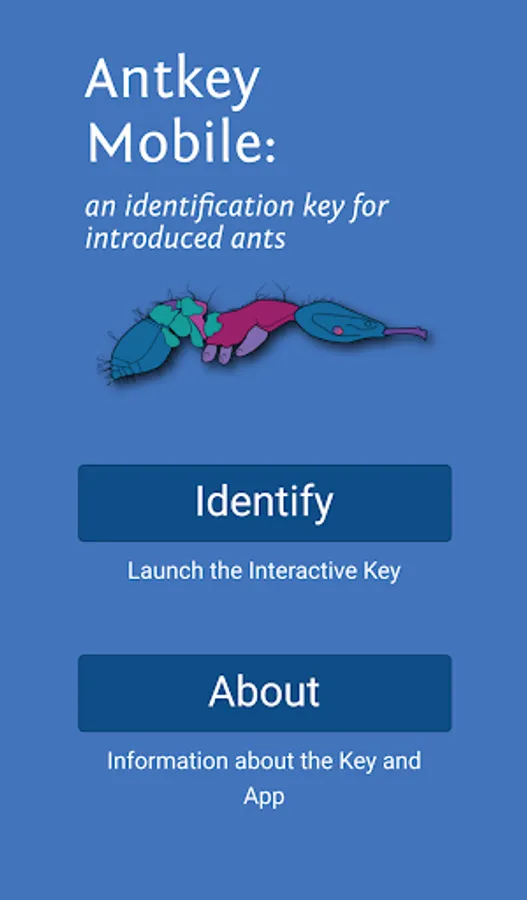
Antkey is a community resource for the identification of invasive, introduced and commonly intercepted ant species from across the globe.
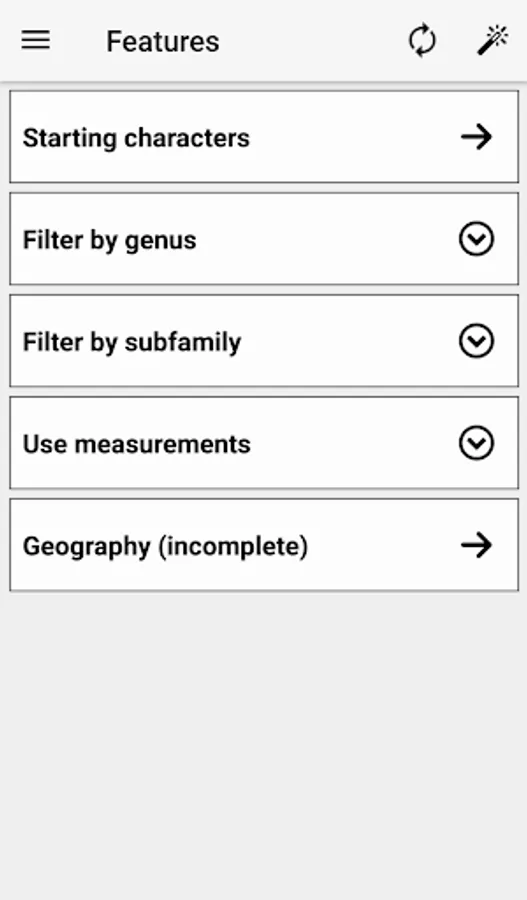
This key was designed to be used with the “Find Best” function. Find best is invoked by tapping on the wand icon on the navigation bar, or by selecting the Find Best option in the navigation drawer.
Authors: Eli M. Sarnat and Andrew V. Suarez
Original source: This key is part of the complete Antkey tool at http://antkey.org (requires internet connection). External links are provided in the fact sheets for convenience, but they also require an internet connection. Full references for all citations may be found at the Antkey website, along with distribution maps, behavior videos, a fully illustrated glossary, and more.
This key was developed in cooperation with the USDA APHIS ITP Identification Technology Program. Please visit http://idtools.org to learn more.
Mobile app updated: August, 2024
Over 15,000 species of ants have been described, and more than 200 have established populations outside of their native ranges. A small subset of these have become highly destructive invaders including the Argentine ant (Linepithema humile), the big-headed ant (Pheidole megacephala), the yellow crazy ant (Anoplolepis gracilipes), the little fire ant (Wasmannia auropunctata), and the red imported fire ant (Solenopsis invicta) which are currently listed among the world’s 100 worst invasive species (Lowe et al. 2000). Additionally, two of these species (Linepithema humile and Solenopsis invicta) are among the four most well studied invasive species generally (Pyšek et al. 2008). Although invasive ants are economically costly in both urban and agricultural areas, the most serious consequences of their introduction may be ecological. Invasive ants can greatly modify ecosystems by reducing native ant diversity, displacing other arthropods, negatively impacting vertebrate populations, and disrupting ant-plant mutualisms.
Invasive ants form a small and somewhat distinct subset of ants introduced into new environments by humans. A majority of introduced ants remain confined to human-modified habitats and some of these species are often referred to as tramp ants because of their reliance on human-mediated dispersal and close association with humans generally. Although hundreds of ant species have become established outside of their native ranges, most research has concentrated on the biology of only a few species.
Antkey is a community resource for the identification of invasive, introduced and commonly intercepted ant species from across the globe.
This key was designed to be used with the “Find Best” function. Find best is invoked by tapping on the wand icon on the navigation bar, or by selecting the Find Best option in the navigation drawer.
Authors: Eli M. Sarnat and Andrew V. Suarez
Original source: This key is part of the complete Antkey tool at http://antkey.org (requires internet connection). External links are provided in the fact sheets for convenience, but they also require an internet connection. Full references for all citations may be found at the Antkey website, along with distribution maps, behavior videos, a fully illustrated glossary, and more.
This key was developed in cooperation with the USDA APHIS ITP Identification Technology Program. Please visit http://idtools.org to learn more.
Mobile app updated: August, 2024
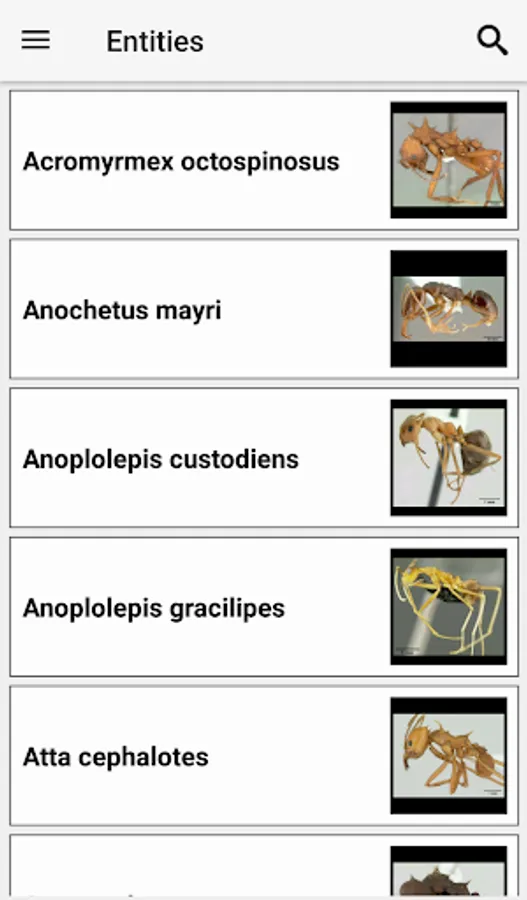
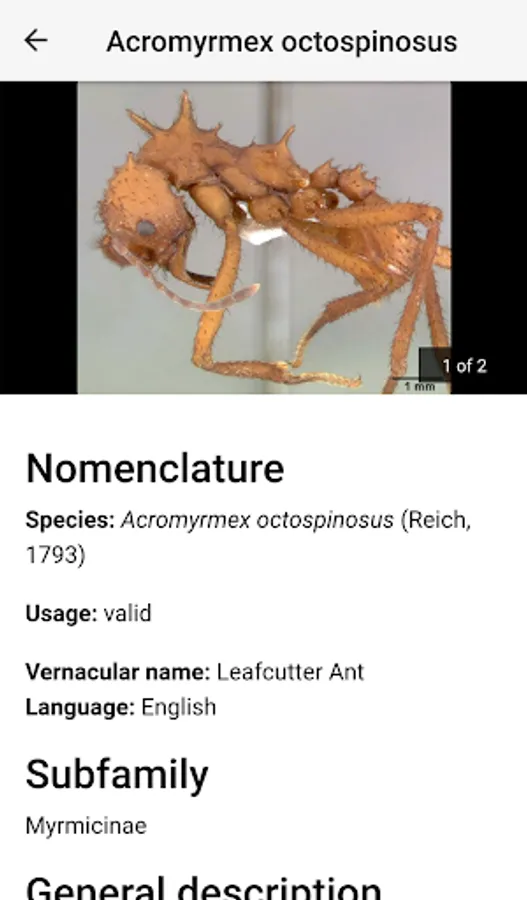
Antkey Mobile Screenshots
Tap to Rate:
Reviews for Antkey Mobile
Linda Tipler
7/23/2022
doesn't work
cadence navigator (Olivia)
12/26/2021
Seems great for experts, but it doesn't even have a color or size section as of now, making it pretty impossible for people who aren't myrmecologists to actually use.