About chasse prépa
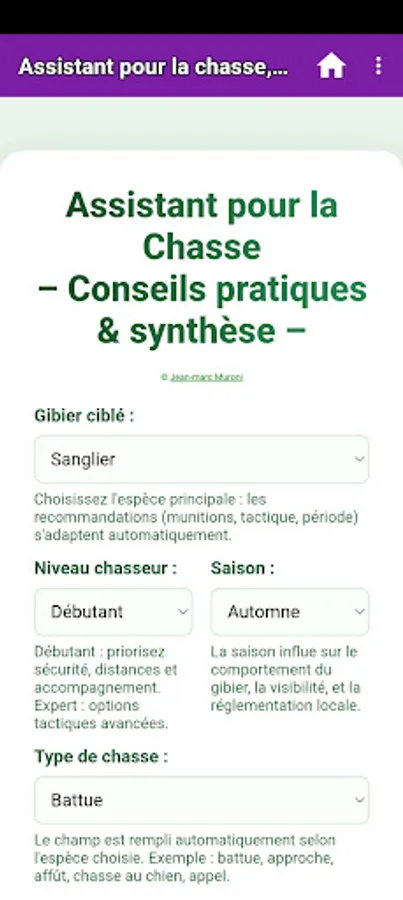
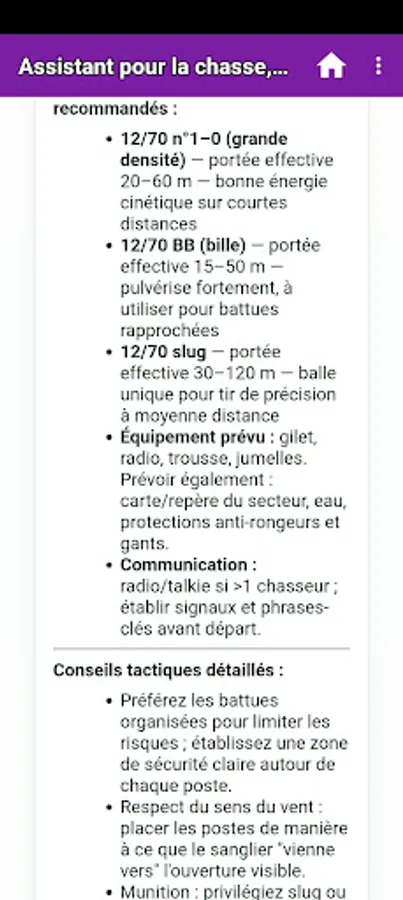
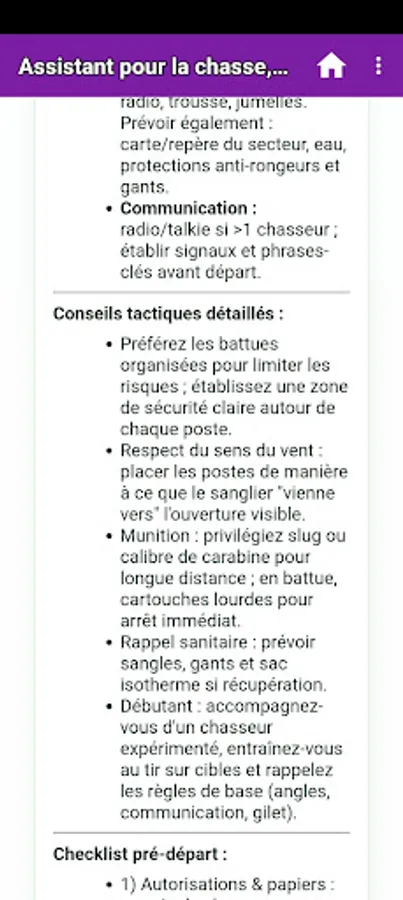
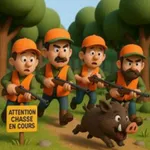
The application is called "Hunting Assistant – Practical Advice & Summary –" and aims to provide strategic support to hunters. It features an interactive form with several parameters to generate a personalized summary. An image illustrating the hunted animal is dynamically displayed based on the selection.
Selection parameters:
Target game: Wild boar, red deer, roe deer, pheasant, partridge, duck/waterfowl, hare, fox. Each selection automatically adjusts recommendations on ammunition, tactics, and hunting seasons.
Hunter level: Beginner, intermediate, expert. Beginners receive advice on safety priorities, distances, and companionship, while experts receive advanced tactical options.
Season: Autumn, winter, spring, summer. The season influences game behavior, visibility, and applicable local regulations.
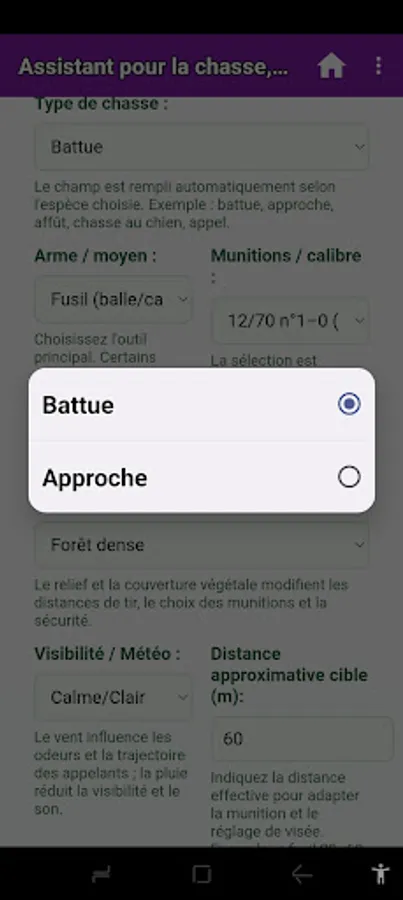
Hunting type: Automatic options based on the selected species. Examples: driven hunt, stalking, stand hunting, hunting with dogs, calling.
Hunting weapon/method: Shotgun (slug/cartridge), rifle (slug), bow, hunting with dogs/traditional. Certain species and types of hunting require specific calibers or ammunition (e.g., steel shot for waterfowl).
Ammunition/caliber: Automatically suggested choice based on game and weapon, taking into account effective range, stopping power, and regulatory compliance.
Terrain: Dense forest, hedgerow, plain/stubble, marsh/wetland, mountain/rocky terrain. This affects shooting distance, ammunition selection, and safety rules.
Visibility/weather: Calm/clear, windy, rainy, snowy, fog/low visibility. Wind influences smells and sounds, while rain reduces visibility and noise.
Approximate target distance in meters (numerical input from 5 to 800 m): Allows for adjusting ammunition and sight settings (shotgun 20–60 m, rifle 100–300 m, etc.). Number of hunters in the area (from 1 to 30): Impacts safety rules such as shooting angles and zones.
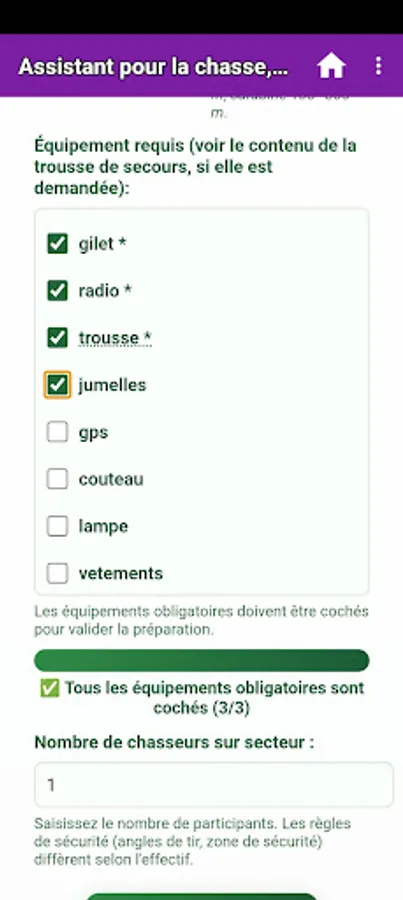
Required equipment: Interactive list indicating mandatory equipment (e.g., first aid kit). Checking all necessary items validates the preparation.
General operation
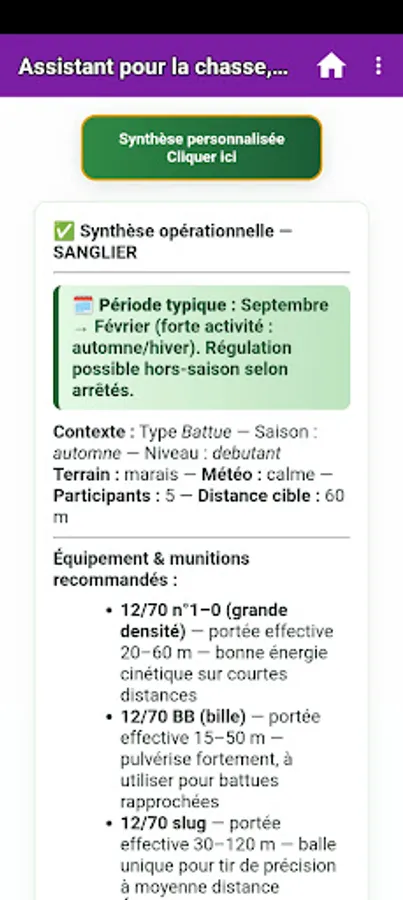
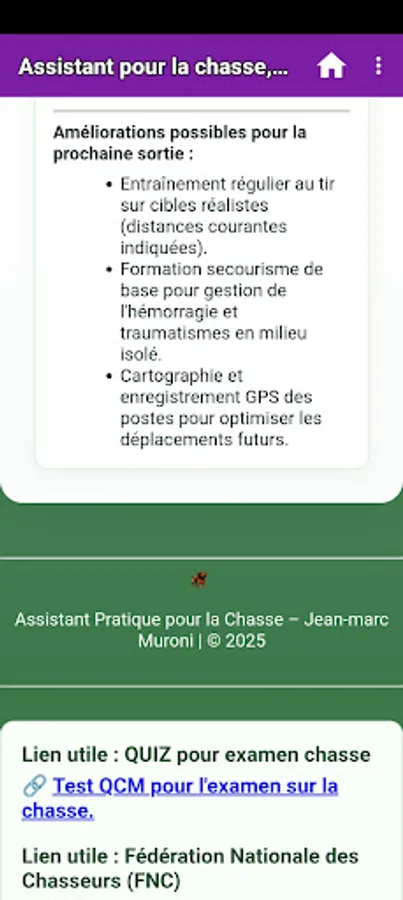
Once the parameters are chosen, the user clicks on "Custom Summary," and the program generates a tailored summary taking all criteria into account.
The interface is designed to be accessible with ARIA labels and contextual help in the form of explanatory notes.
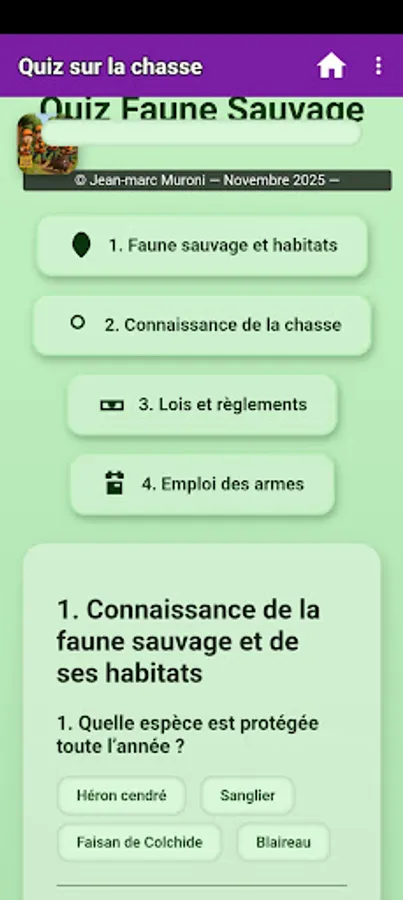
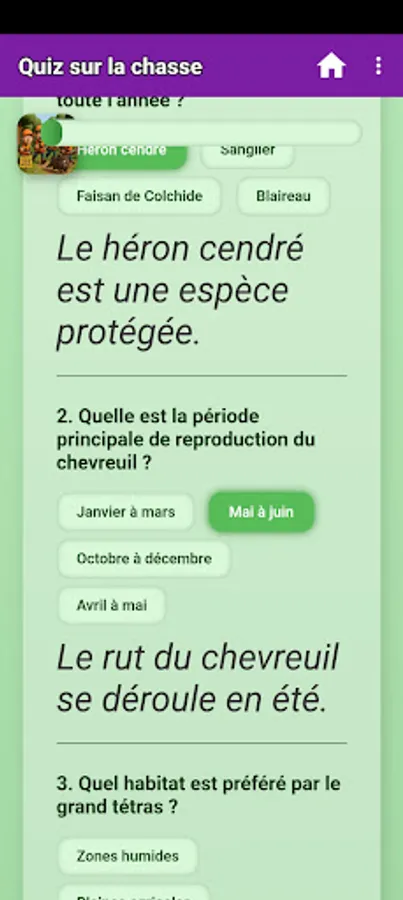
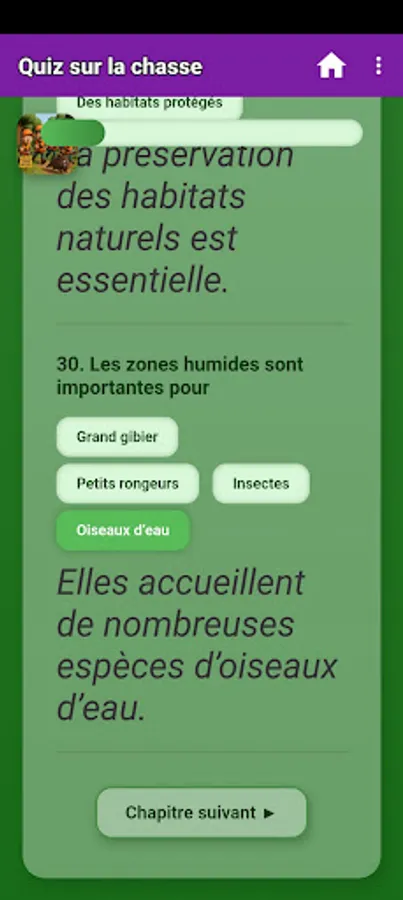
As a bonus, an interactive quiz of 120 questions on the four topics of the hunting license exam is offered at the end of the summary.
Dynamic content and adaptation
The hunting type and ammunition options are dynamically injected via JavaScript based on the other criteria.
The program also contains an integrated database of characteristics and advice for each game species (specific ammunition, ideal seasons, hunting methods, terrain features).
Selection parameters:
Target game: Wild boar, red deer, roe deer, pheasant, partridge, duck/waterfowl, hare, fox. Each selection automatically adjusts recommendations on ammunition, tactics, and hunting seasons.
Hunter level: Beginner, intermediate, expert. Beginners receive advice on safety priorities, distances, and companionship, while experts receive advanced tactical options.
Season: Autumn, winter, spring, summer. The season influences game behavior, visibility, and applicable local regulations.
Hunting type: Automatic options based on the selected species. Examples: driven hunt, stalking, stand hunting, hunting with dogs, calling.
Hunting weapon/method: Shotgun (slug/cartridge), rifle (slug), bow, hunting with dogs/traditional. Certain species and types of hunting require specific calibers or ammunition (e.g., steel shot for waterfowl).
Ammunition/caliber: Automatically suggested choice based on game and weapon, taking into account effective range, stopping power, and regulatory compliance.
Terrain: Dense forest, hedgerow, plain/stubble, marsh/wetland, mountain/rocky terrain. This affects shooting distance, ammunition selection, and safety rules.
Visibility/weather: Calm/clear, windy, rainy, snowy, fog/low visibility. Wind influences smells and sounds, while rain reduces visibility and noise.
Approximate target distance in meters (numerical input from 5 to 800 m): Allows for adjusting ammunition and sight settings (shotgun 20–60 m, rifle 100–300 m, etc.). Number of hunters in the area (from 1 to 30): Impacts safety rules such as shooting angles and zones.
Required equipment: Interactive list indicating mandatory equipment (e.g., first aid kit). Checking all necessary items validates the preparation.
General operation
Once the parameters are chosen, the user clicks on "Custom Summary," and the program generates a tailored summary taking all criteria into account.
The interface is designed to be accessible with ARIA labels and contextual help in the form of explanatory notes.
As a bonus, an interactive quiz of 120 questions on the four topics of the hunting license exam is offered at the end of the summary.
Dynamic content and adaptation
The hunting type and ammunition options are dynamically injected via JavaScript based on the other criteria.
The program also contains an integrated database of characteristics and advice for each game species (specific ammunition, ideal seasons, hunting methods, terrain features).