
Cebuano-English Dictionary
Jeroen Hellingman
3.6 ★
287 ratings
10,000+
downloads
Free
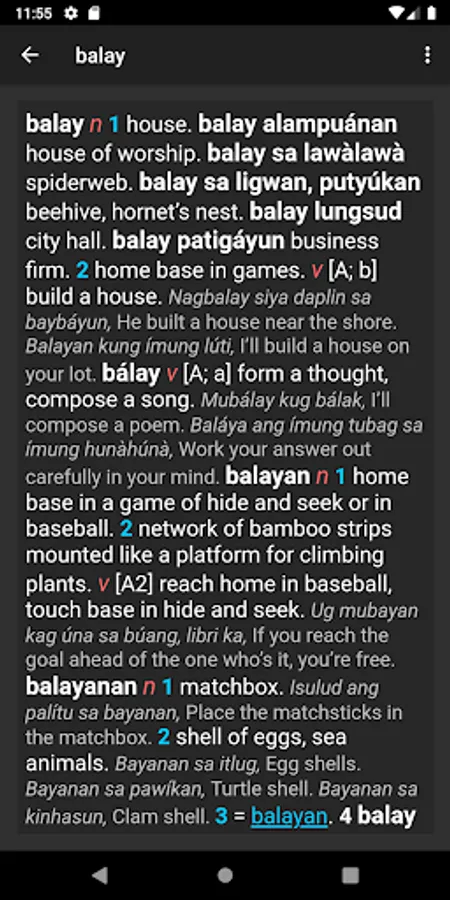
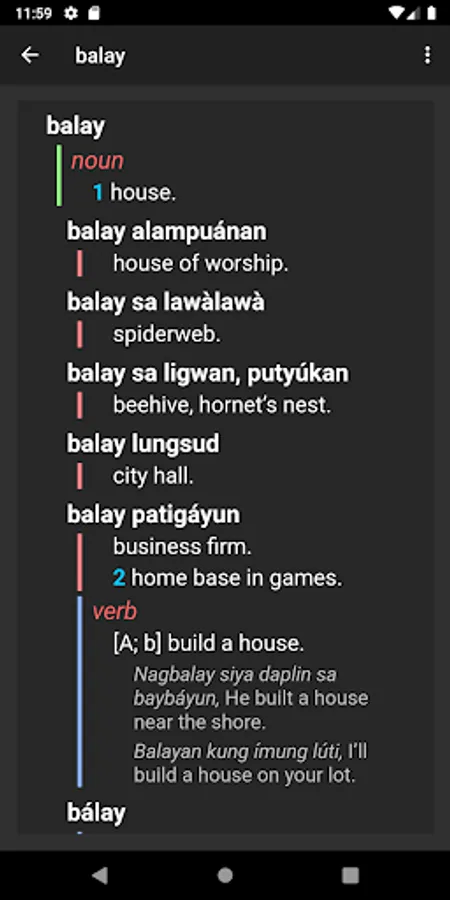
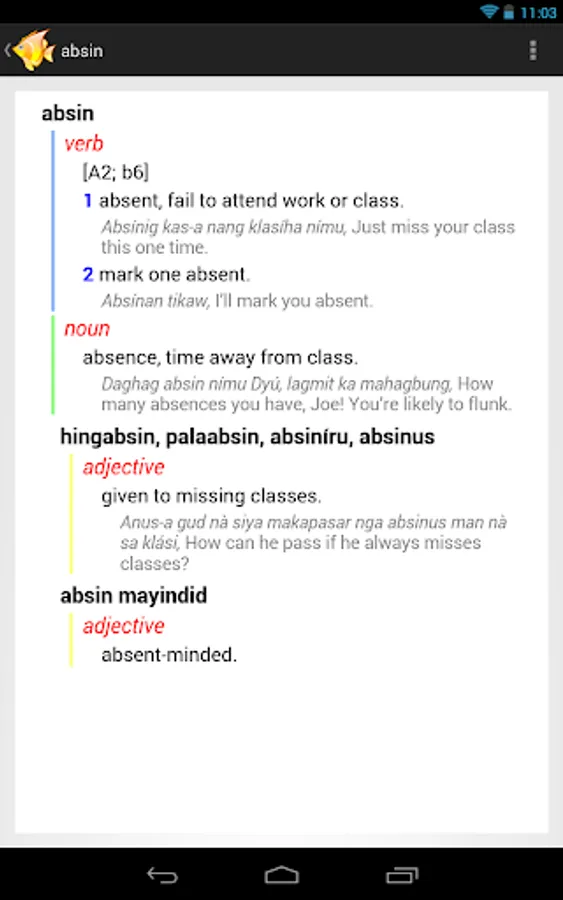
In this Cebuano-English Dictionary, you can search for words and browse definitions with sample sentences. Includes offline access, phonetic transcription, and reverse look-up features.
AppRecs review analysis
AppRecs rating 3.7. Trustworthiness 53 out of 100. Review manipulation risk 37 out of 100. Based on a review sample analyzed.
★★★☆☆
3.7
AppRecs Rating
Ratings breakdown
5 star
60%
4 star
10%
3 star
0%
2 star
0%
1 star
30%
What to know
✓
Good user ratings
70% positive sampled reviews
✓
Authentic reviews
No red flags detected
⚠
High negative review ratio
30% of sampled ratings are 1–2 stars
About Cebuano-English Dictionary
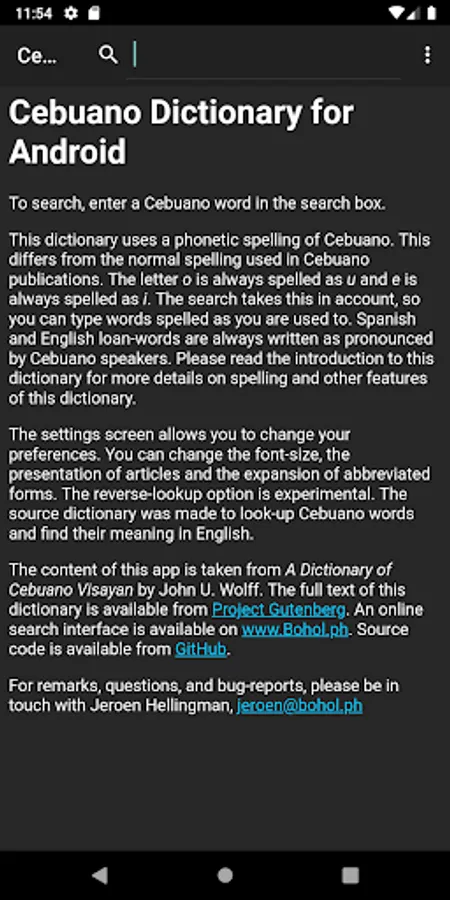
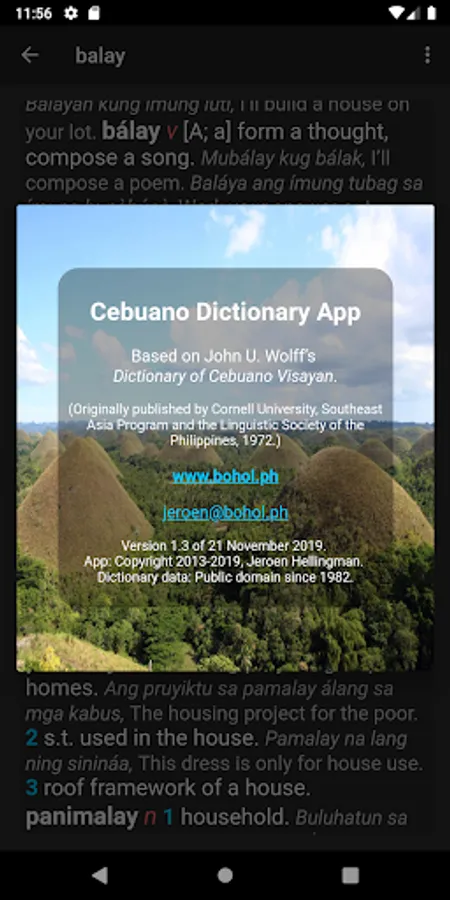
This Cebuano-English Dictionary app contains the full text of "A Dictionary of Cebuano Visayan", edited by John U Wolff and first published in 1972. This dictionary is still one of the best dictionaries made for Cebuano.
Cebuano, also known as Visayan, Bisayan, or locally as Binisaya, is spoken in the provinces of Cebu, Negros Oriental, Siquijor, Bohol, and Leyte, in the Visayas region in the Central Philippines, as well as on the island of Mindanao in the Southern Philippines. Cebuano is related to, but distinguished from Hiligaynon (or Ilonggo) and Waray-Waray, languages which are also sometimes called "Visayan".
The content of this dictionary is based on original research between 1966 and 1972, in which the editor and his team collected samples of actual written and spoken Cebuano to use in this dictionary. Besides providing English definitions, it provides sample sentences for many words, all taken from daily usage.
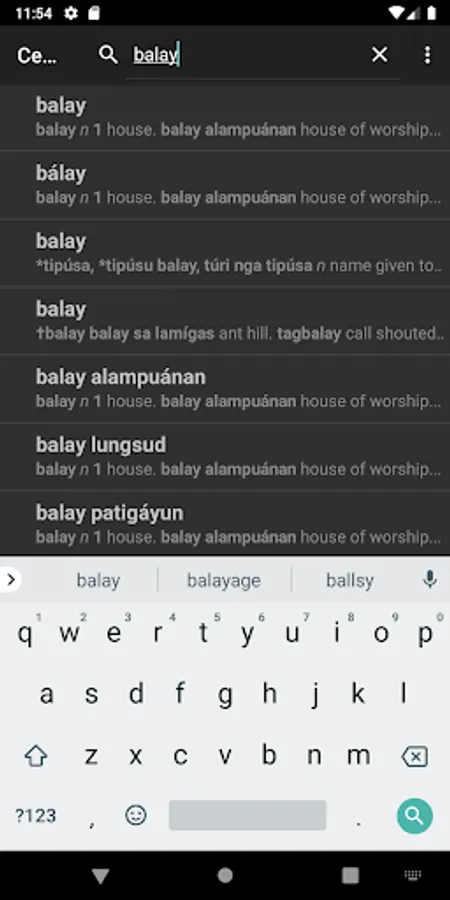
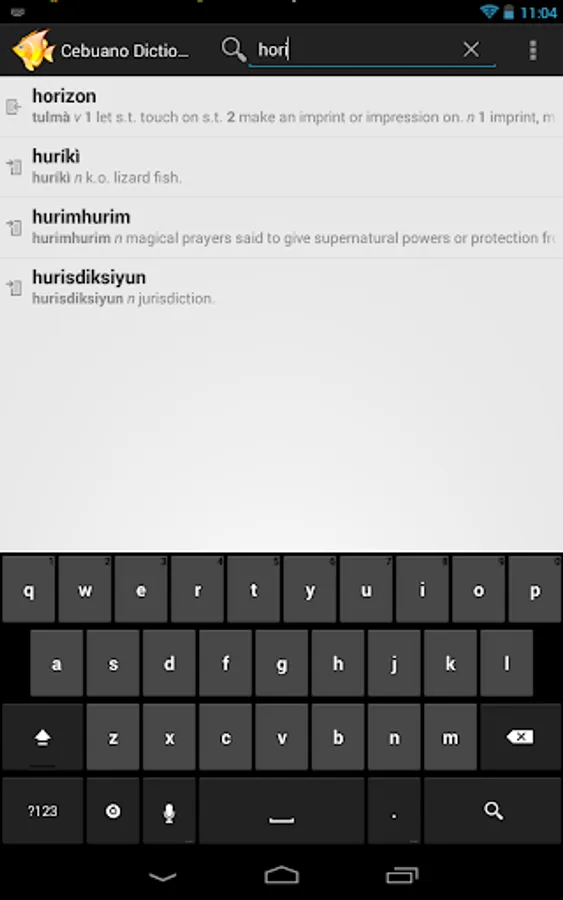
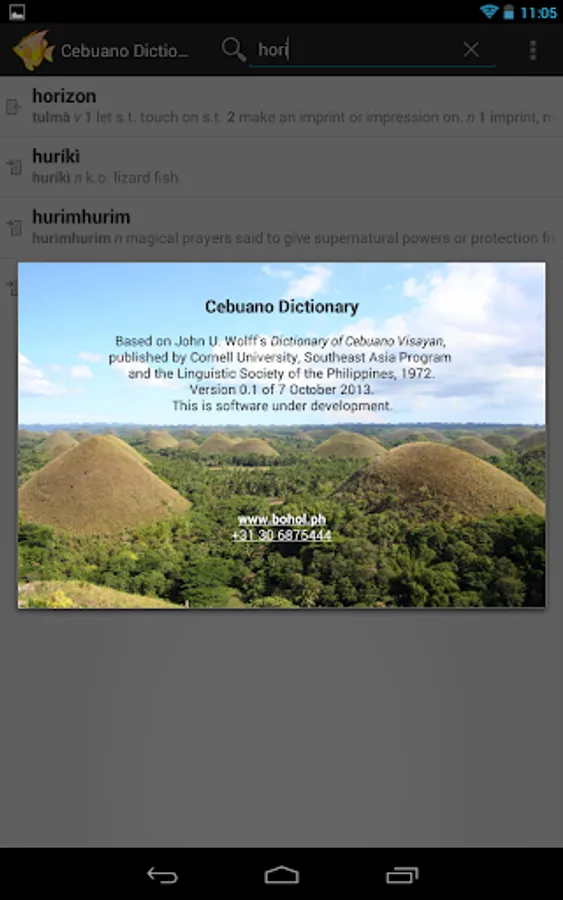
When using this dictionary, please keep in mind that the spelling of words used is different from the normal spelling used in the Philippines. In line with the editor's focus on the language as spoken, the dictionary uses a phonetic transcription that uses only three vowels, "a", "i", and "u". The "o" and "e" are not used. The search interface has been adjusted, such that words spelled in the normal way will still be found, for example, if you search for "unom", six as it normally written, the dictionary will return unum, following the phonetic spelling used in Wolff's dictionary.
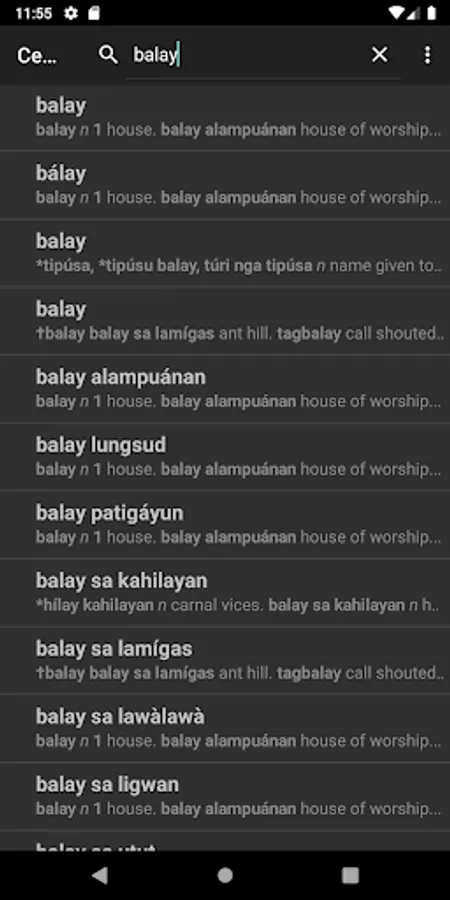
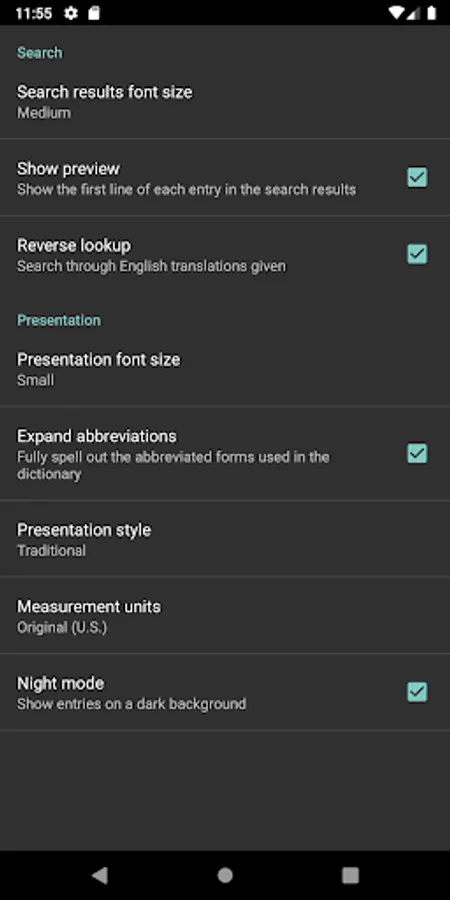
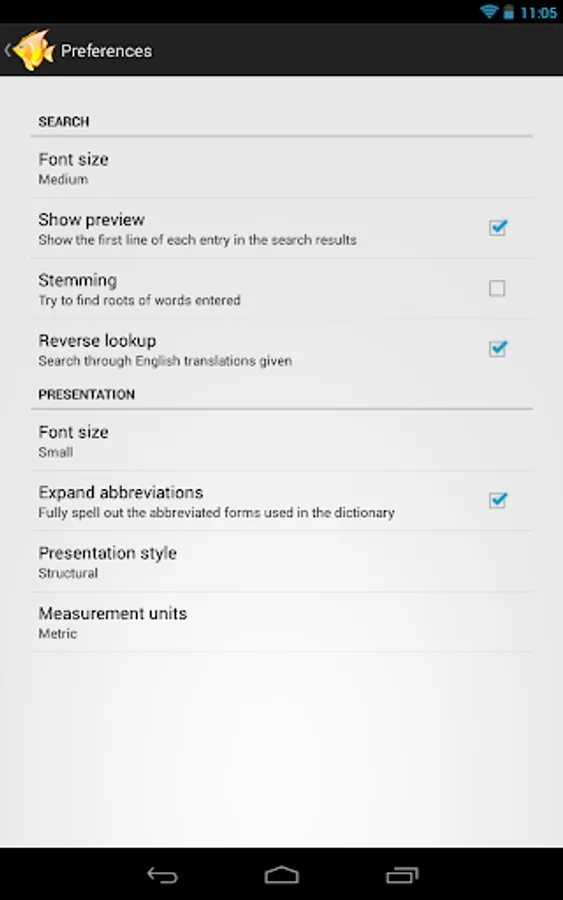
The app provides a fast searchable interface, structured formatting of entries, and allows reverse look-ups to a limited extend. It can be used off-line, as all dictionary data is stored on our device.
Since all dictionary data is part of the app, the app functions off-line, and does not require (or even use) internet access. It will not send any information back to me. My privacy policy is simple: I do not collect any information (except that which is collected by Google itself in Google Play, and that information I will only use to get some impression of how many people use the app and to resolve possible technical issues.)
Cebuano, also known as Visayan, Bisayan, or locally as Binisaya, is spoken in the provinces of Cebu, Negros Oriental, Siquijor, Bohol, and Leyte, in the Visayas region in the Central Philippines, as well as on the island of Mindanao in the Southern Philippines. Cebuano is related to, but distinguished from Hiligaynon (or Ilonggo) and Waray-Waray, languages which are also sometimes called "Visayan".
The content of this dictionary is based on original research between 1966 and 1972, in which the editor and his team collected samples of actual written and spoken Cebuano to use in this dictionary. Besides providing English definitions, it provides sample sentences for many words, all taken from daily usage.
When using this dictionary, please keep in mind that the spelling of words used is different from the normal spelling used in the Philippines. In line with the editor's focus on the language as spoken, the dictionary uses a phonetic transcription that uses only three vowels, "a", "i", and "u". The "o" and "e" are not used. The search interface has been adjusted, such that words spelled in the normal way will still be found, for example, if you search for "unom", six as it normally written, the dictionary will return unum, following the phonetic spelling used in Wolff's dictionary.
The app provides a fast searchable interface, structured formatting of entries, and allows reverse look-ups to a limited extend. It can be used off-line, as all dictionary data is stored on our device.
Since all dictionary data is part of the app, the app functions off-line, and does not require (or even use) internet access. It will not send any information back to me. My privacy policy is simple: I do not collect any information (except that which is collected by Google itself in Google Play, and that information I will only use to get some impression of how many people use the app and to resolve possible technical issues.)
Cebuano-English Dictionary Screenshots
Tap to Rate:
Reviews for Cebuano-English Dictionary
Felix P. Mahilum
9/7/2024
very good
Michael Tajan
11/8/2023
As a Cebuano language teacher, this is the best app for dictionary that I have ever come across. Thank you so much Jeroen!