In this music creation app, users control synthesizer parameters and sequences through motion and touch inputs. Includes presets, wav recording, pattern sequencing, and effects rig.
AppRecs review analysis
AppRecs rating 4.4. Trustworthiness 70 out of 100. Review manipulation risk 39 out of 100. Based on a review sample analyzed.
★★★★☆
4.4
AppRecs Rating
Ratings breakdown
5 star
80%
4 star
7%
3 star
0%
2 star
0%
1 star
13%
What to know
✓
Credible reviews
70% trustworthiness score from analyzed reviews
✓
High user satisfaction
87% of sampled ratings are 4+ stars (4.4★ average)
✓
Authentic reviews
No red flags detected
About Fang Synth
Fang Synth has been awarded the “App of The Day” by MyAppFree ( https://app.myappfree.com/). It will be free to download from 10 to 12 January! Get MyAppFree to discover more offers and sales!
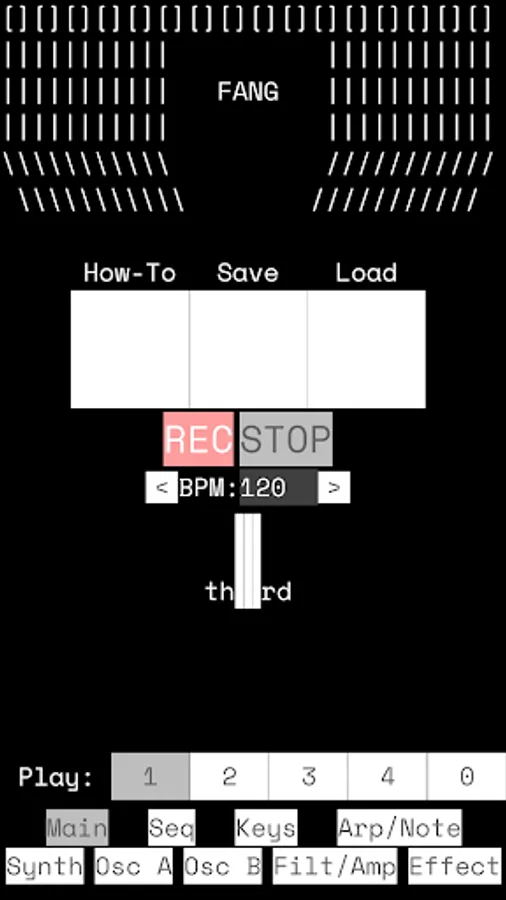
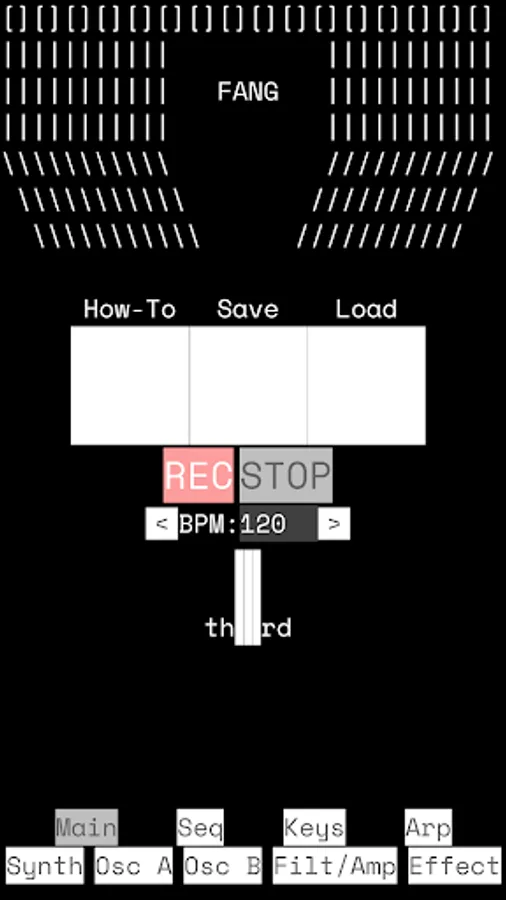
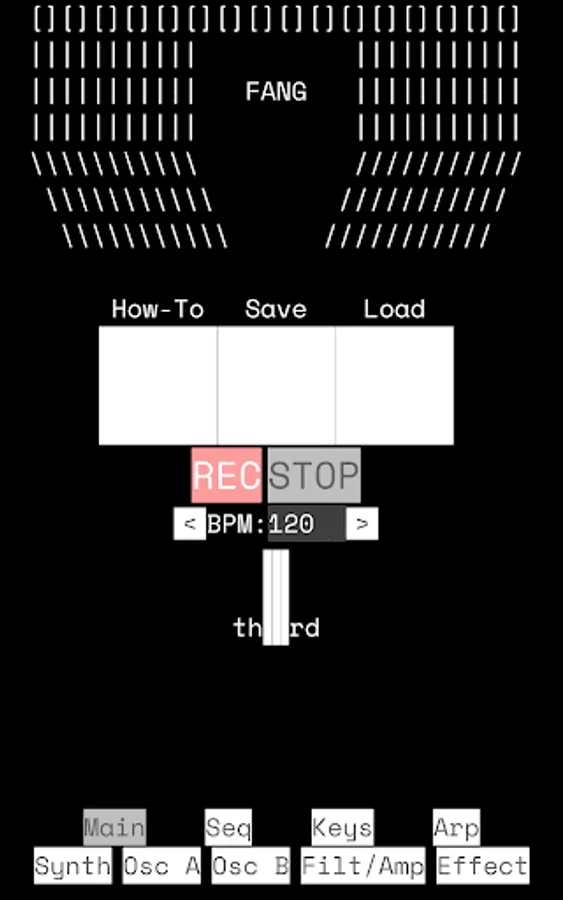
Fang Synth is an app based on motion control of a synth, arpeggiator, and sequencer through accelerometer information. Each parameter can be linked to different directions of motion. Contains presets, wav recording, a stepped arpeggiator with diatonic/pentatonic scale locking, a multi-pattern sequencer, wave shaping oscillators, resonant filter with envelope and pitch locking, and an effects rig (including formant filter, pitched delay, reverb, down-sample, bit reduction.) Can be played by non synthesists as well: load presets and control sound through motion. Capable of strange sonic textures, complex evolving arpeggios, or classic synth sounds.
Full guide and video quick-start at akunull.com/fang-guide
Control Pattern:
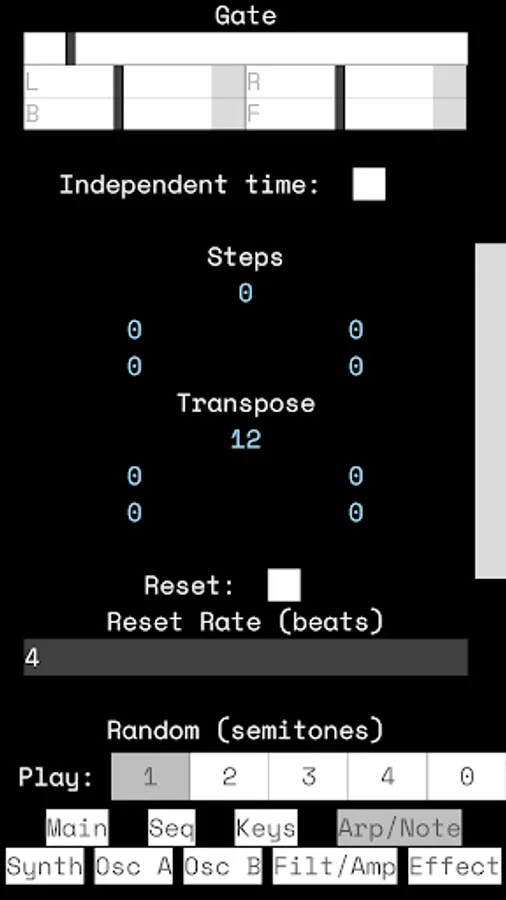
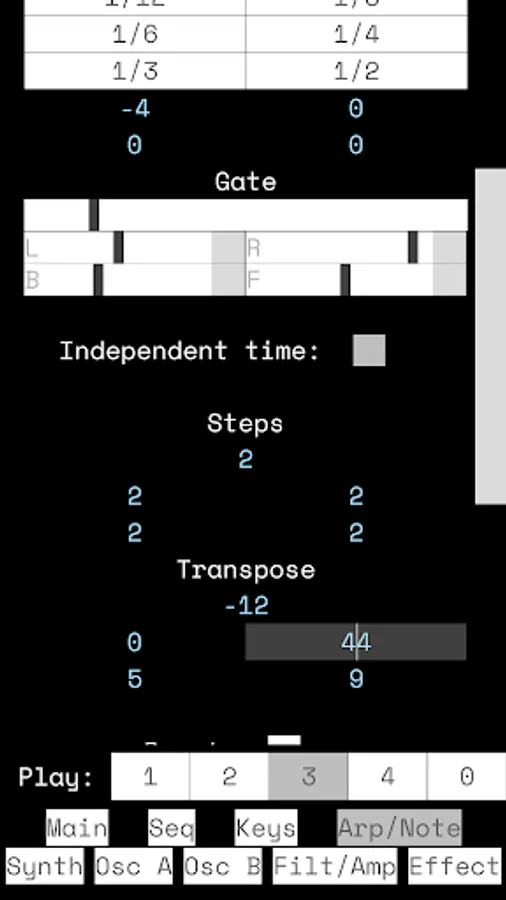
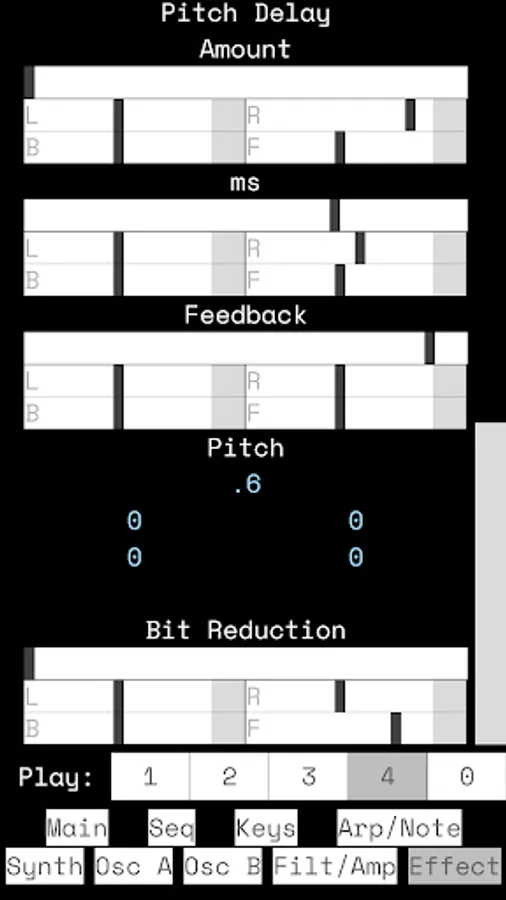
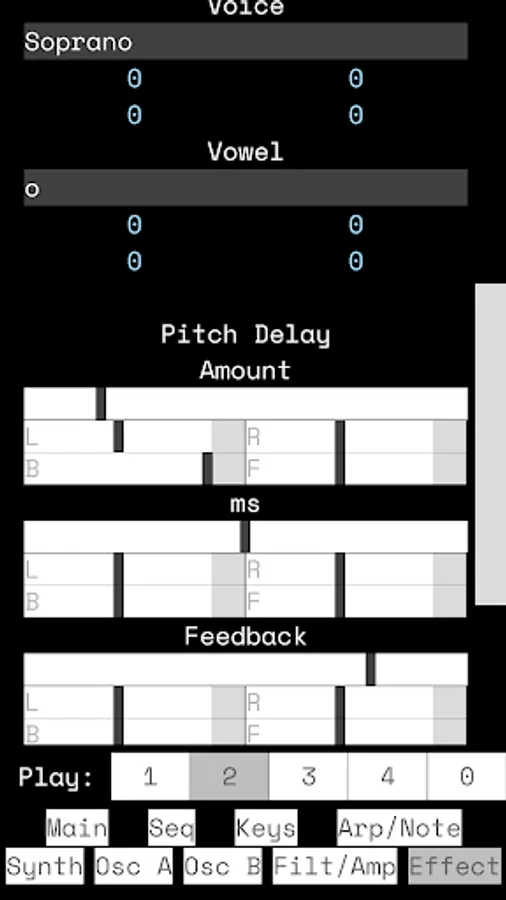
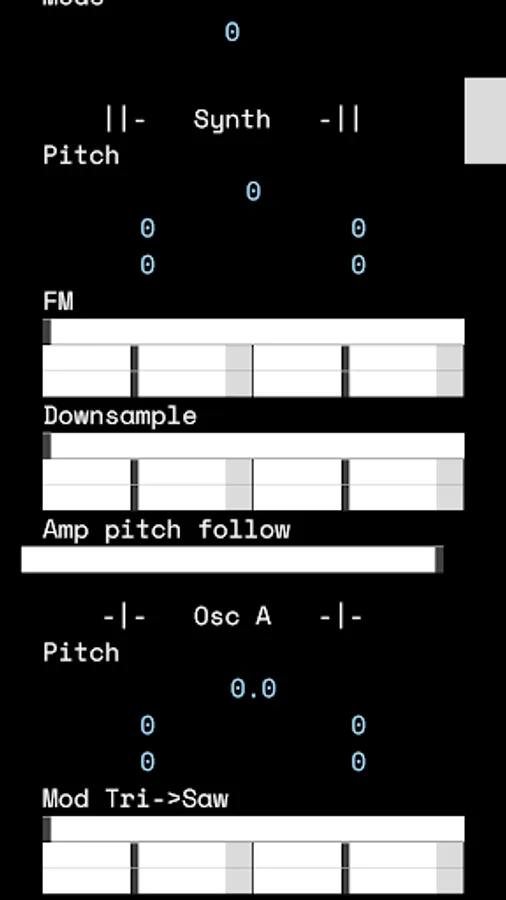
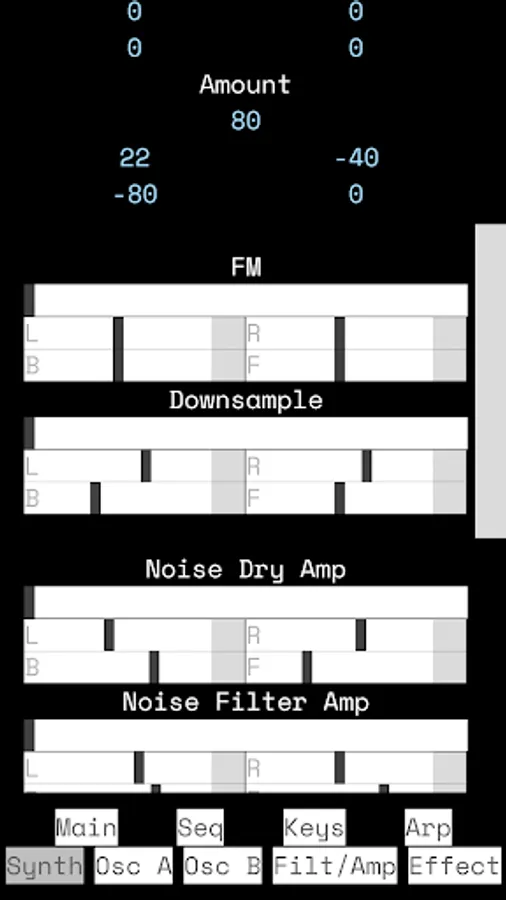
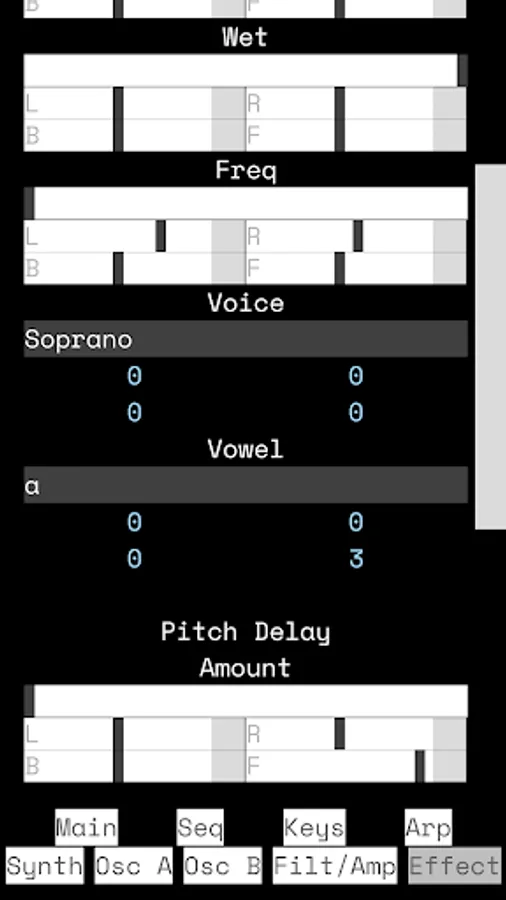
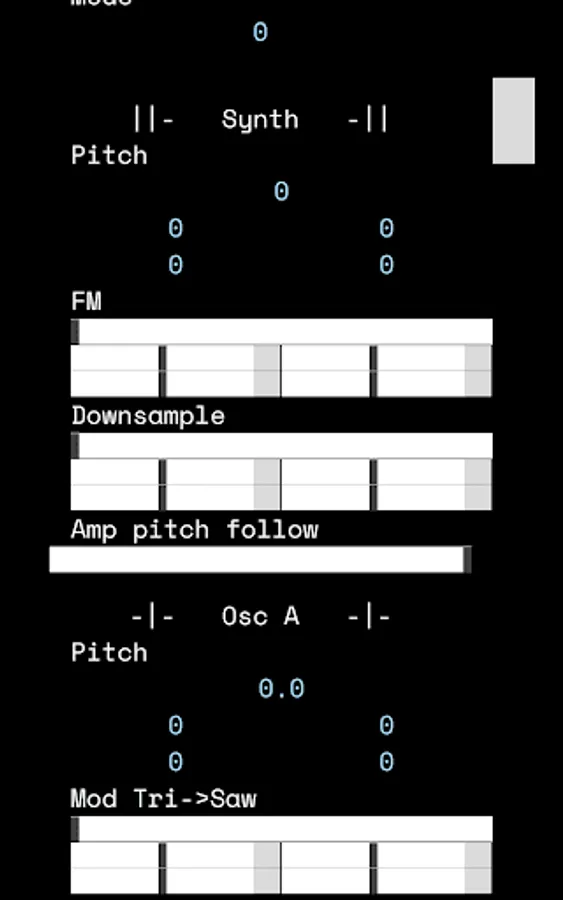
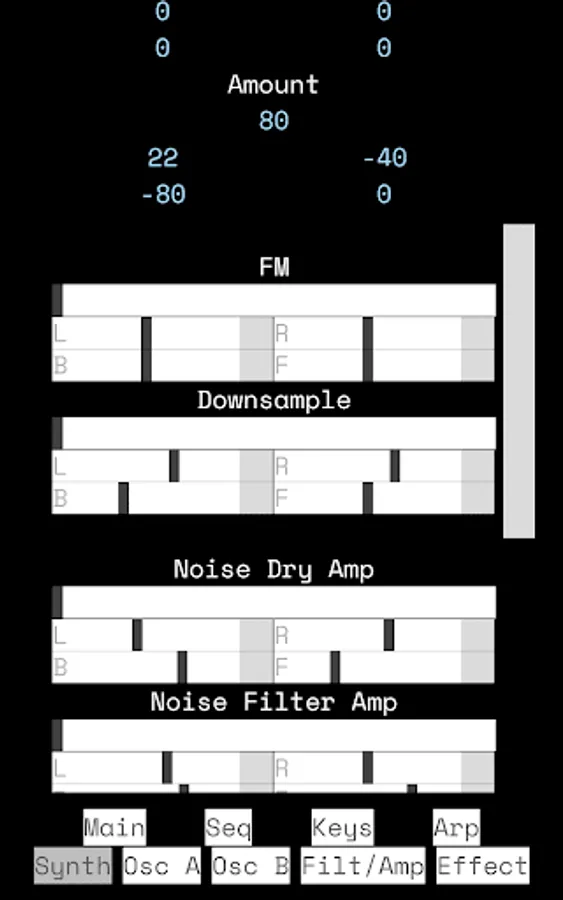
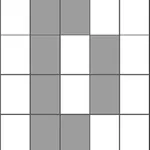
Each control has five sub-controls associated with it. The top, largest control is the main control and changes the actual value. The four controls beneath determine how much that value is changed by moving in each of the four directions. Top left -> left tilt, top right -> right tilt, bottom left -> back, bottom right-> forward. For an easier time understanding the concept, the video walk-through might be of help. akunull.com/fang-guide
Notes are generated with the sequencer and keyboard.
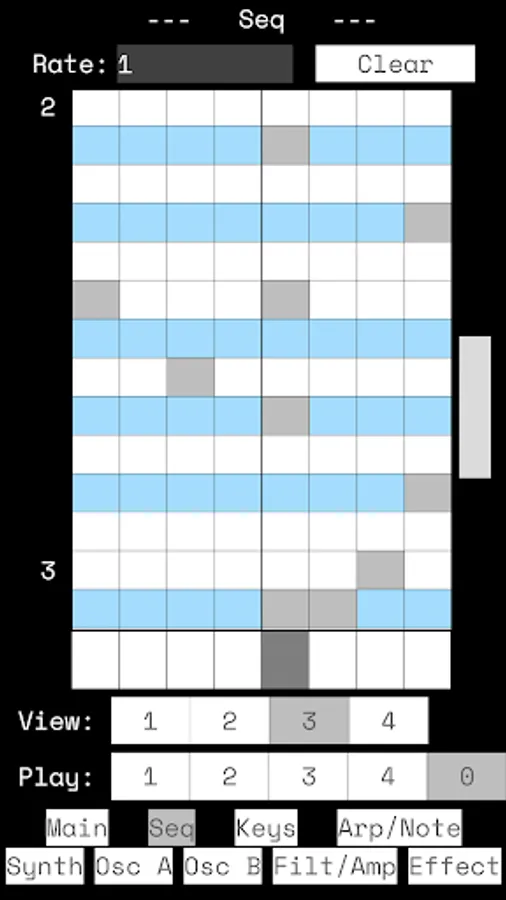
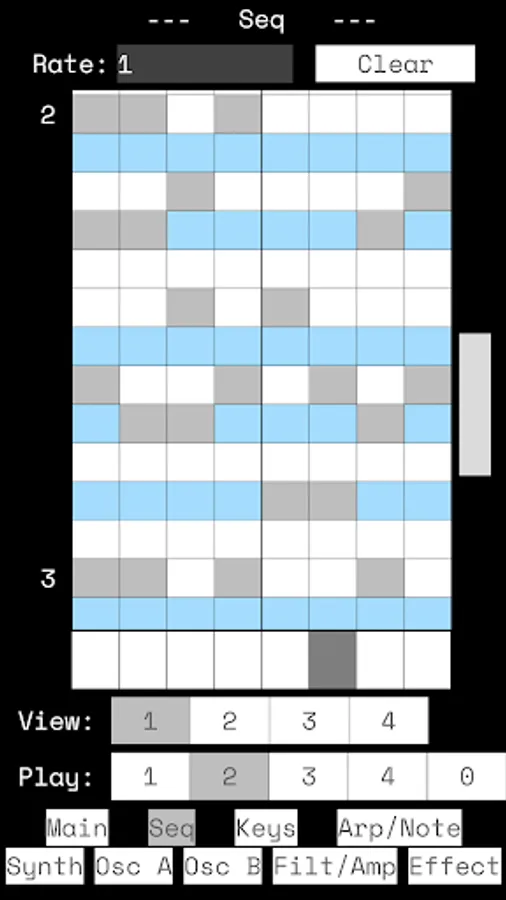
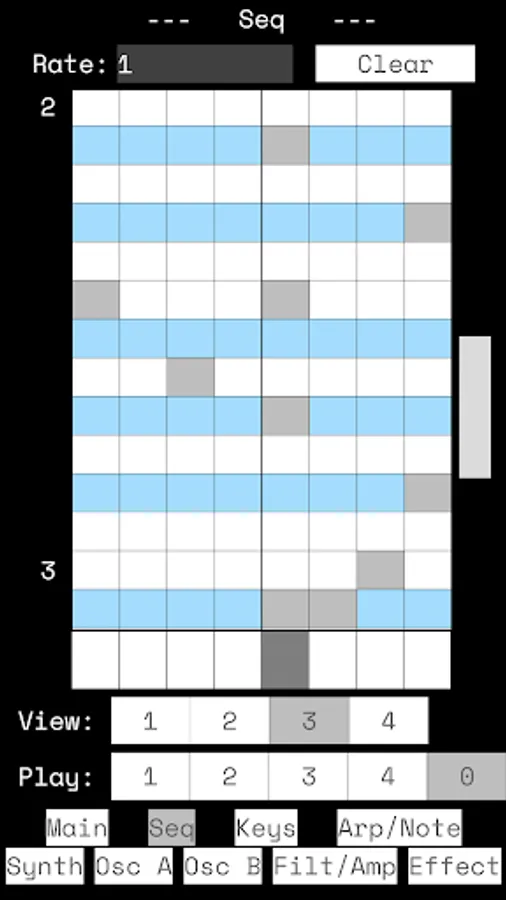
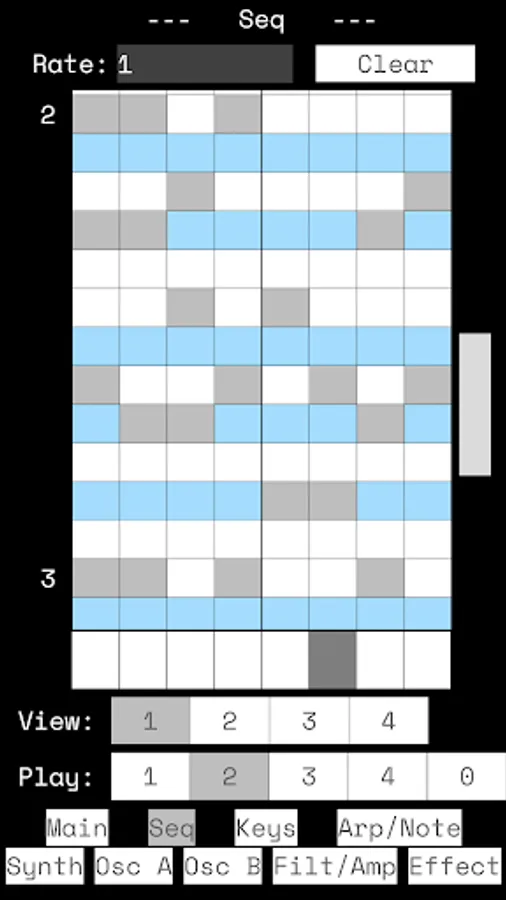
The sequencer works by moving a step at the rate specified. There are four patterns that can be played and edited independently.
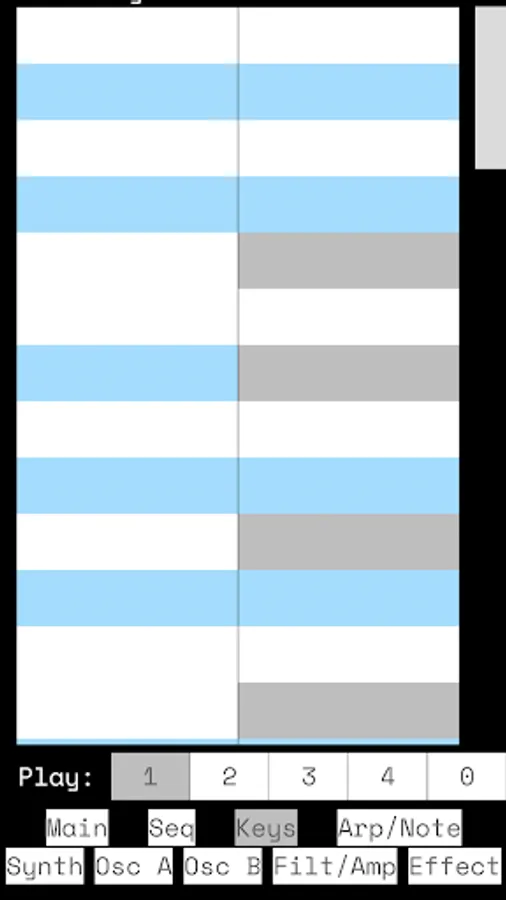
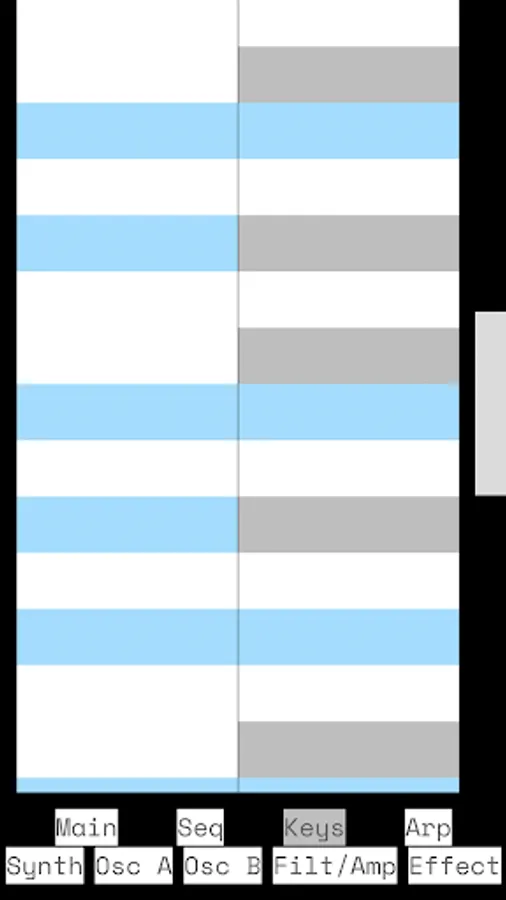
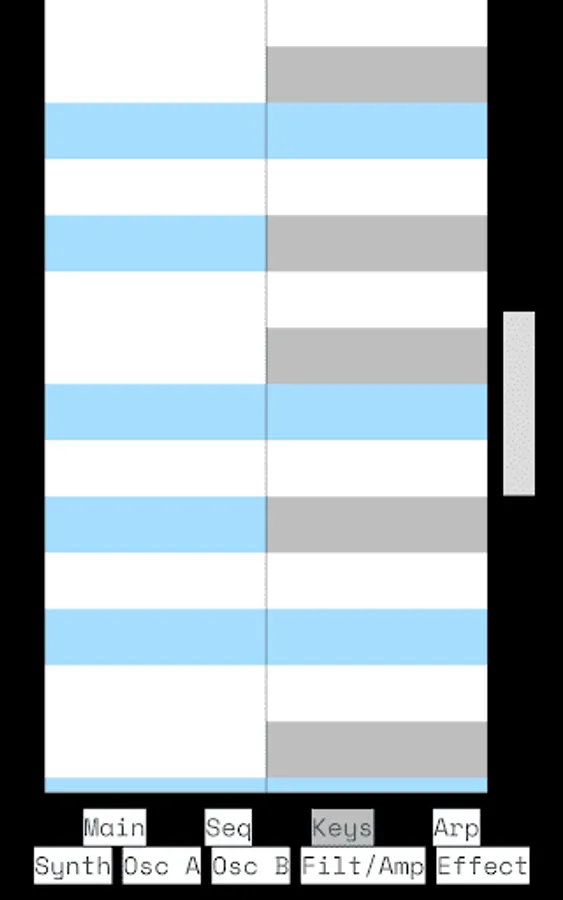
The keyboard has a set of notes that can be played or buttons which hold notes. Held notes can be cut off by sequencer notes of the same pitch.
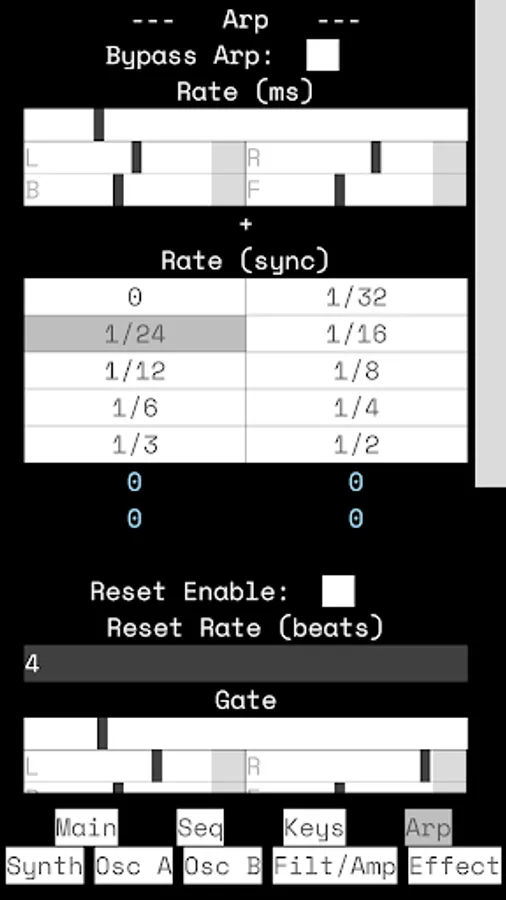
The arpeggiator receives notes from the sequencer and keyboard. Its rate is controlled by both synced time and ms that are added together. It has variable steps, step transpose and gate. The steps and timing can be reset periodically with the optional arp reset. There is optional scale locking as well, allowing you to select a root note and scale from the diatonic scales (major, dorian, phrygian, lydian, mixolydian, minor, and locrian), major/minor pentatonic scales, and the blues scale.
The synth's sounds are generated with five voices, each with two oscillators that either modulate between triangle and saw or sine and square.
Modulation is effected by an envelope. There is a pitch envelope that effects both oscillators. The oscillators are capable of fm (osc B modulating osc A.) Both oscillators can have their signals sent to the filter or directly to the amp envelope. A white noise signal can also be added to the filter or directly to the amp envelope.
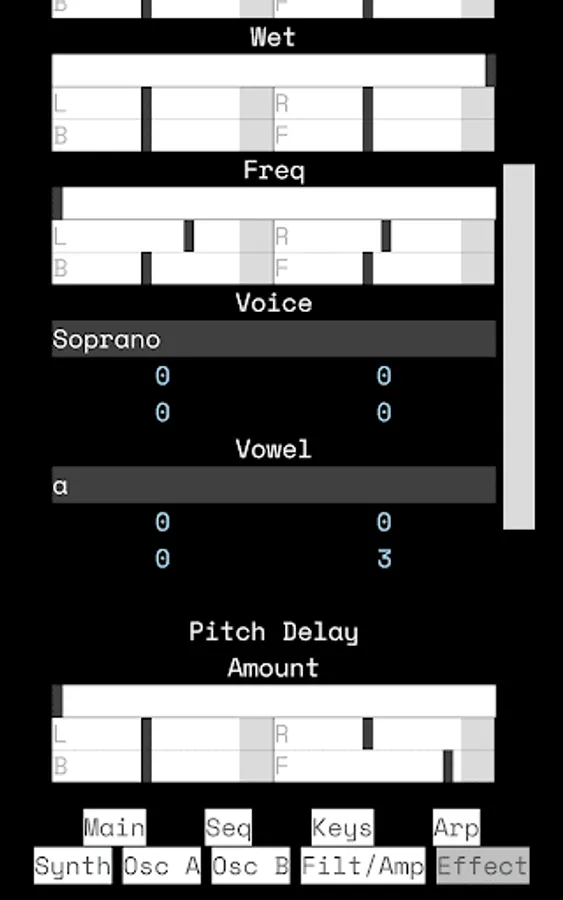
The filter is a 4 pole resonant band-pass whose frequency can follow the pitch. It is also effected by its own ADSR envelope. The filtered and unfiltered signal is sent to a per voice down sample and per voice delay under synth menu. All voices are sent to an effect rig with a formant (vowel) filter, pitched delay, reverb, and bit reduction.
File permission is for presets and WAV recording. Any questions, concerns, or creations, please contact
Fang Synth is an app based on motion control of a synth, arpeggiator, and sequencer through accelerometer information. Each parameter can be linked to different directions of motion. Contains presets, wav recording, a stepped arpeggiator with diatonic/pentatonic scale locking, a multi-pattern sequencer, wave shaping oscillators, resonant filter with envelope and pitch locking, and an effects rig (including formant filter, pitched delay, reverb, down-sample, bit reduction.) Can be played by non synthesists as well: load presets and control sound through motion. Capable of strange sonic textures, complex evolving arpeggios, or classic synth sounds.
Full guide and video quick-start at akunull.com/fang-guide
Control Pattern:
Each control has five sub-controls associated with it. The top, largest control is the main control and changes the actual value. The four controls beneath determine how much that value is changed by moving in each of the four directions. Top left -> left tilt, top right -> right tilt, bottom left -> back, bottom right-> forward. For an easier time understanding the concept, the video walk-through might be of help. akunull.com/fang-guide
Notes are generated with the sequencer and keyboard.
The sequencer works by moving a step at the rate specified. There are four patterns that can be played and edited independently.
The keyboard has a set of notes that can be played or buttons which hold notes. Held notes can be cut off by sequencer notes of the same pitch.
The arpeggiator receives notes from the sequencer and keyboard. Its rate is controlled by both synced time and ms that are added together. It has variable steps, step transpose and gate. The steps and timing can be reset periodically with the optional arp reset. There is optional scale locking as well, allowing you to select a root note and scale from the diatonic scales (major, dorian, phrygian, lydian, mixolydian, minor, and locrian), major/minor pentatonic scales, and the blues scale.
The synth's sounds are generated with five voices, each with two oscillators that either modulate between triangle and saw or sine and square.
Modulation is effected by an envelope. There is a pitch envelope that effects both oscillators. The oscillators are capable of fm (osc B modulating osc A.) Both oscillators can have their signals sent to the filter or directly to the amp envelope. A white noise signal can also be added to the filter or directly to the amp envelope.
The filter is a 4 pole resonant band-pass whose frequency can follow the pitch. It is also effected by its own ADSR envelope. The filtered and unfiltered signal is sent to a per voice down sample and per voice delay under synth menu. All voices are sent to an effect rig with a formant (vowel) filter, pitched delay, reverb, and bit reduction.
File permission is for presets and WAV recording. Any questions, concerns, or creations, please contact