AppRecs review analysis
AppRecs rating 3.3. Trustworthiness 82 out of 100. Review manipulation risk 24 out of 100. Based on a review sample analyzed.
★★★☆☆
3.3
AppRecs Rating
Ratings breakdown
5 star
50%
4 star
0%
3 star
0%
2 star
25%
1 star
25%
What to know
✓
Low review manipulation risk
24% review manipulation risk
✓
Credible reviews
82% trustworthiness score from analyzed reviews
About Lumariver Depth of Field
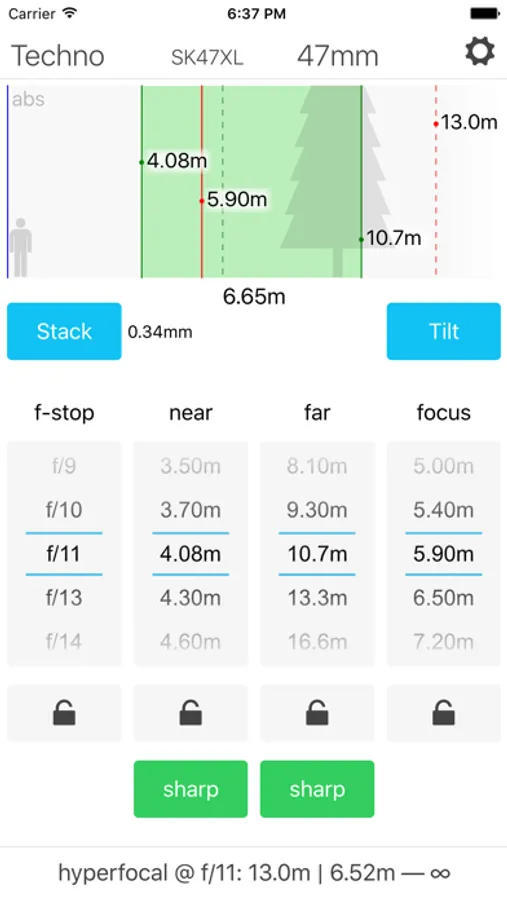
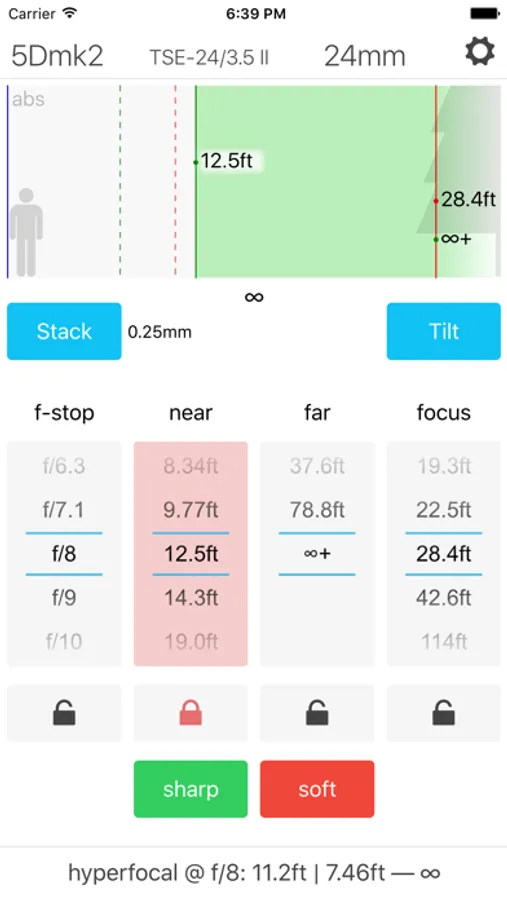
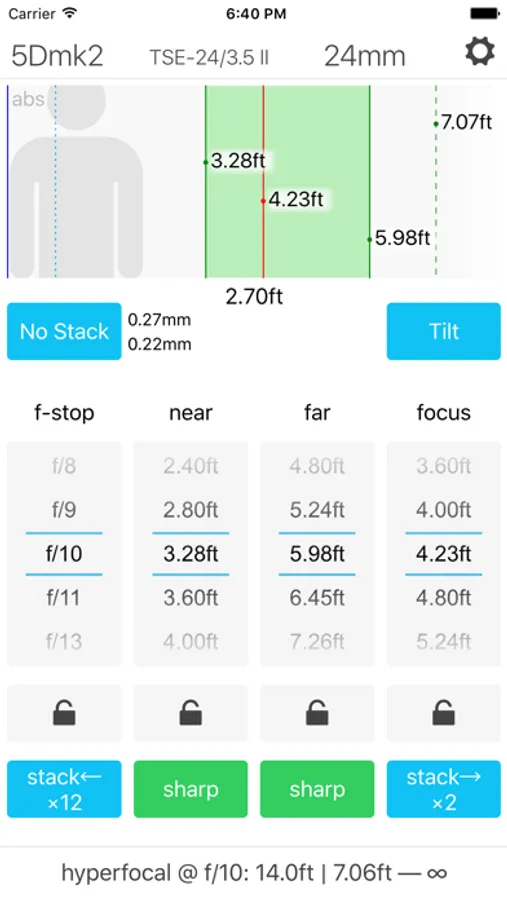
The Lumariver Depth of Field Calculator is an app that helps you maximize the sharpness of your photographs. It’s primarily intended for landscape, architecture and all other genres where the goal is to have a sharp image front to back. Rather than being a calculator for theoretical exercises it’s designed for being a practical tool in the field, and it has a thorough user manual that describes real use cases. The user interface is optimized for one-hand operation using scrollers.
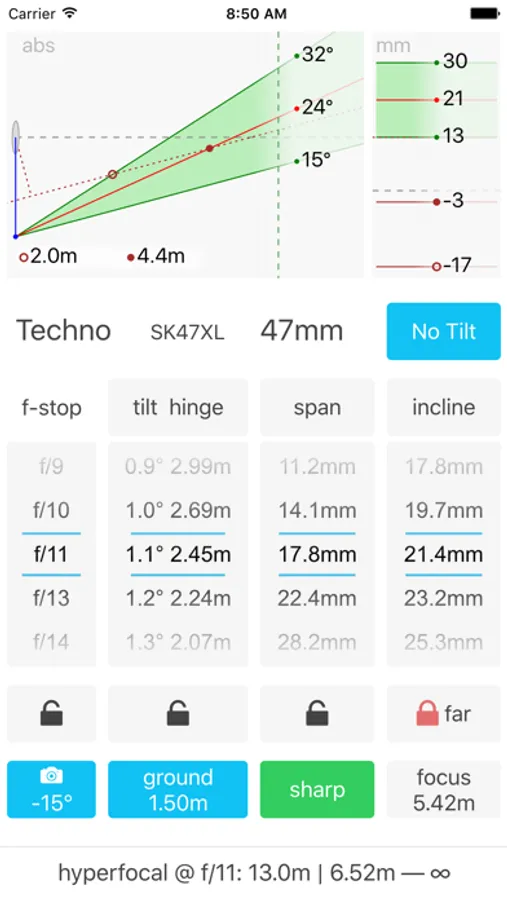
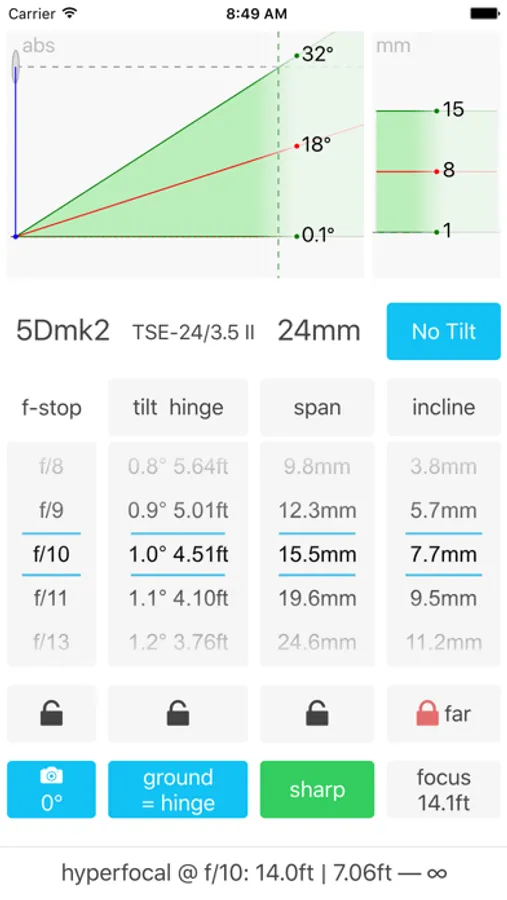
In addition to the normal depth of field calculator it supports tilted depth of field (tilt-shift lenses, Scheimpflug principle) as well as focus stacking. The functions you don't intend to use can be turned off to keep the user interface as clean and simple as possible. Custom circle of confusion sizes can be set, which in addition to a fixed number may be relative to airy disc diameter and/or pixel pitch. It even supports dual circle of confusion sizes, one “sharp” and one “soft” to make it easy to do controlled trade-offs in difficult situations. By entering your own camera(s) and lenses once you have them easily accessible by name making the workflow efficient in the field.
Distances can be shown either in meters or in decimal feet.
In addition to the normal depth of field calculator it supports tilted depth of field (tilt-shift lenses, Scheimpflug principle) as well as focus stacking. The functions you don't intend to use can be turned off to keep the user interface as clean and simple as possible. Custom circle of confusion sizes can be set, which in addition to a fixed number may be relative to airy disc diameter and/or pixel pitch. It even supports dual circle of confusion sizes, one “sharp” and one “soft” to make it easy to do controlled trade-offs in difficult situations. By entering your own camera(s) and lenses once you have them easily accessible by name making the workflow efficient in the field.
Distances can be shown either in meters or in decimal feet.
Lumariver Depth of Field Screenshots
Tap to Rate:
Reviews for Lumariver Depth of Field
Mattician
Out of date don’t buy
Do not buy I want my money back! It’s way out of date and can only go to f2.8......
wisest of the wise
Limited usefulness
The measurements are in meters only and the closest focus distance is two meters. Often for portraits my distance is less than that so the app is very limited for me. My fault for not taking the developer at his word, it’s for landscape work.