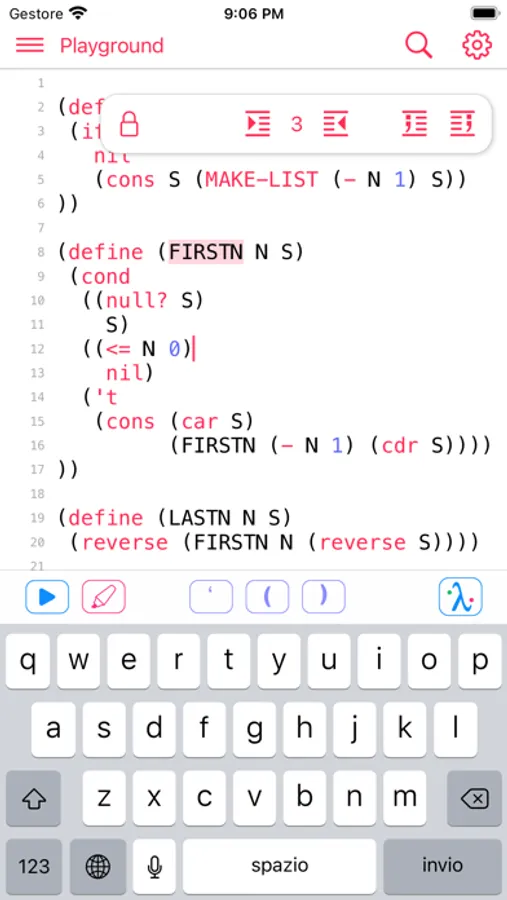
In this app, you can write, run, and explore Lisp code directly on your devices using the built-in editor and interpreter. Includes functions for mathematical computations, classical Lisp problems, and example programs for learning Lisp syntax.
AppRecs review analysis
AppRecs rating 4.4. Trustworthiness 84 out of 100. Review manipulation risk 22 out of 100. Based on a review sample analyzed.
★★★★☆
4.4
AppRecs Rating
Ratings breakdown
5 star
59%
4 star
24%
3 star
0%
2 star
0%
1 star
18%
What to know
✓
Low review manipulation risk
22% review manipulation risk
✓
Credible reviews
84% trustworthiness score from analyzed reviews
✓
High user satisfaction
82% of sampled ratings are 4+ stars (4.1★ average)
About My Lisp
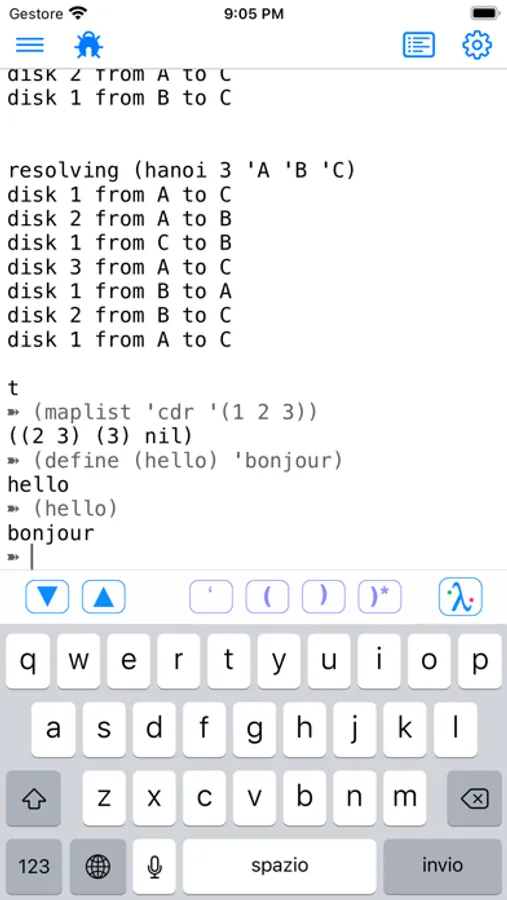
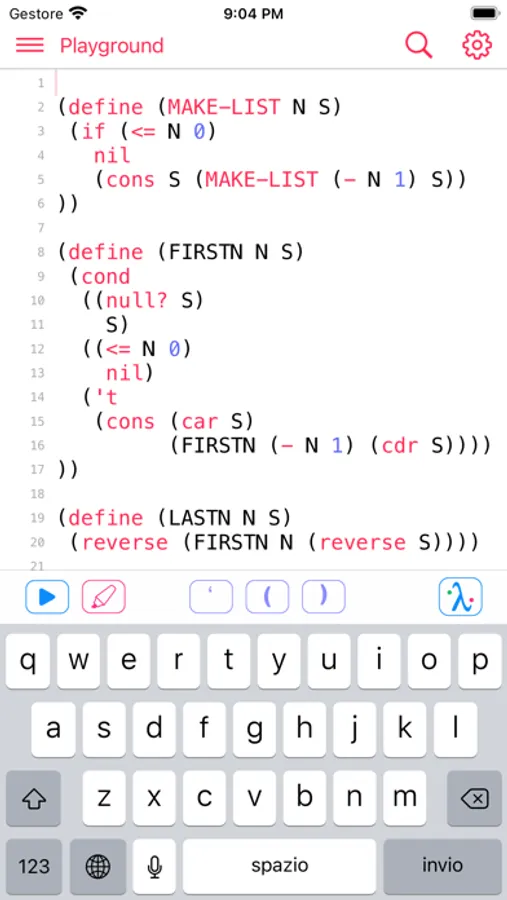
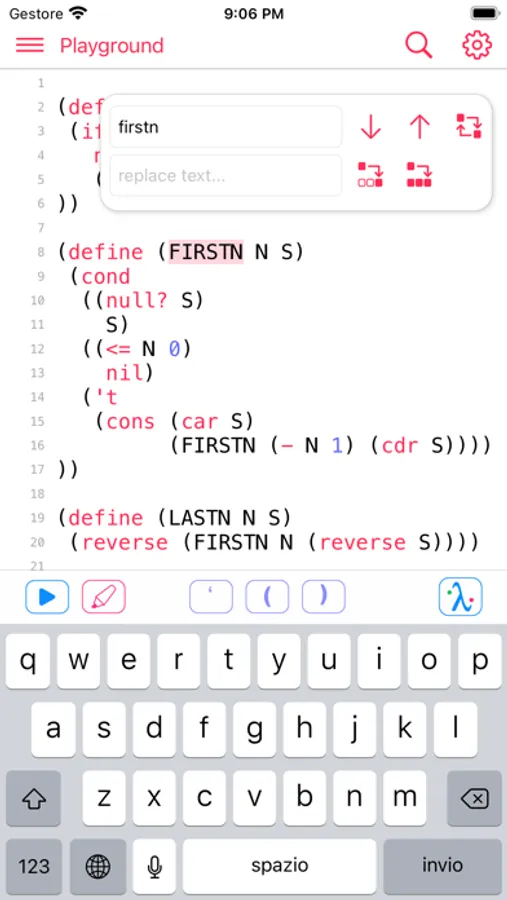
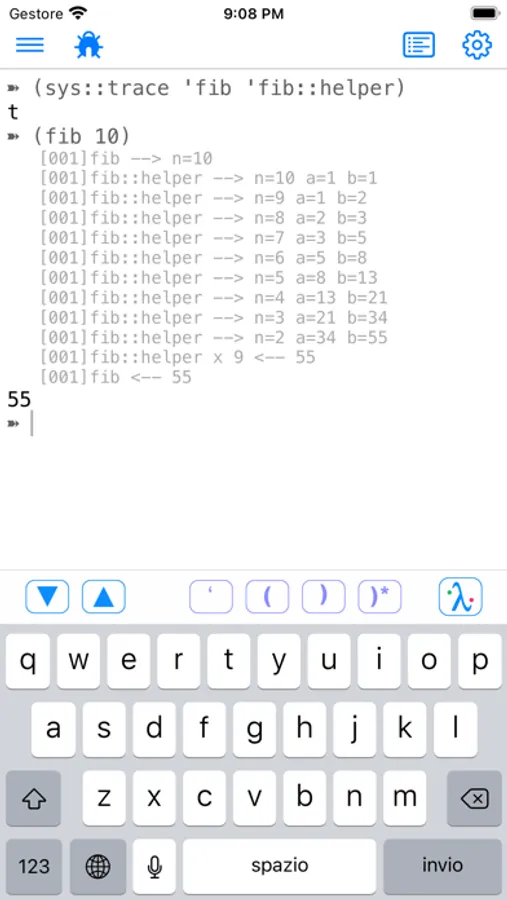
My Lisp offers an interpreter and an editor, all working on the iPhone, iPad, and Mac, and most importantly, without requiring any server connection, that is, the interpreter is executing locally on the iPhone, iPad or Mac My Lisp is installed on.
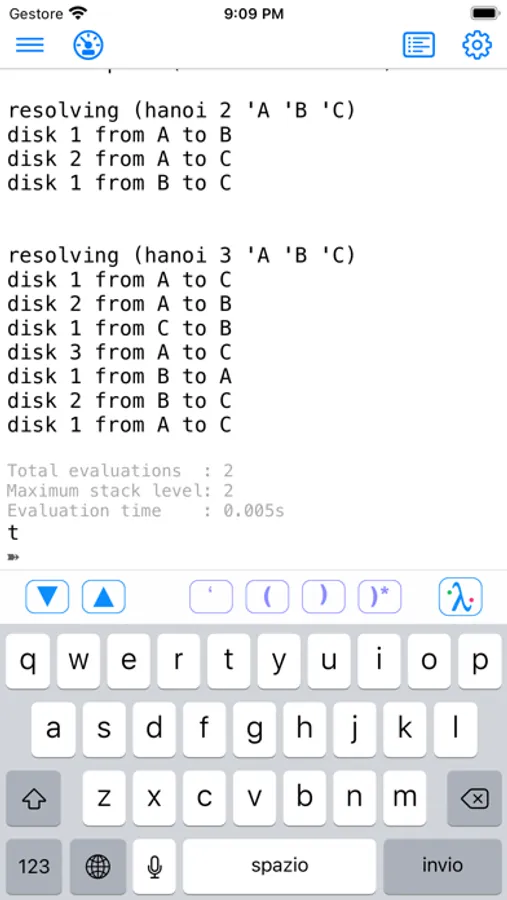
Library and example files contain the source code of classical functions and problems solved by My Lisp and may be used as reference to learn Lisp and develop other programs. They include classical puzzles (hanoi and n-queens), basic mathematical functions (gcd, lcm, factorial, fibonacci, prime?), and the historical apply, mapcar and maplist functions. The Lambda Calculus example file contains various functions related to Lambda Calculus and Combinators, with alpha-conversion, beta-reduction, de Bruijn notations, etc. As a special note, the example file Symbolic Derivation contains a complete yet extensible symbolic derivation module allowing to compute the formal derivation of virtually any symbolic function expressed as a Lisp expression.
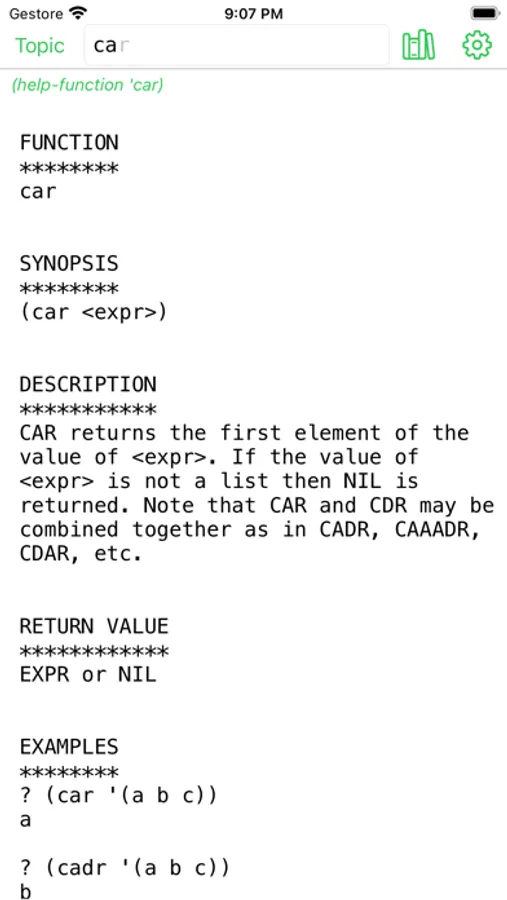
A user manual and a reference manual are available from within the application but also on My Lisp web site (https://lisp.lsrodier.net) and in Apple Books. The complete source code of the library and example files is part of My Lisp.
Last but not least, this overview couldn’t end without a sample definition of the notorious REPL function:
(define (REPL eval_me) (REPL (println (eval (read)))))
My Lisp Screenshots
Tap to Rate:
Reviews for My Lisp
W_H
Very nice iOS implementation
Nice lisp interpreter I’m on iOS. It’s fast and extensible. Includes a number of examples. Nice editor and other tools included. Can’t beat the price.
Miss Monroe NYC
MAJOR FUNCTIONS MISSING
This app is useless. Most functions from common lisp say ‘undefined function’. There isn’t even an array function. Basic functions such as defun are missing. Is there a way to get them in there, and if so how to define them? We don’t know because the ‘help’ tab is also useless.