AppRecs review analysis
AppRecs rating 4.5. Trustworthiness 65 out of 100. Review manipulation risk 20 out of 100. Based on a review sample analyzed.
★★★★☆
4.5
AppRecs Rating
Ratings breakdown
5 star
100%
4 star
0%
3 star
0%
2 star
0%
1 star
0%
What to know
✓
Low review manipulation risk
20% review manipulation risk
✓
High user satisfaction
100% of sampled ratings are 5 stars
About Dege Kham Dialect Dictionary
Study the spoken Dege dialect of Tibetan with this comprehensive trilingual dictionary.
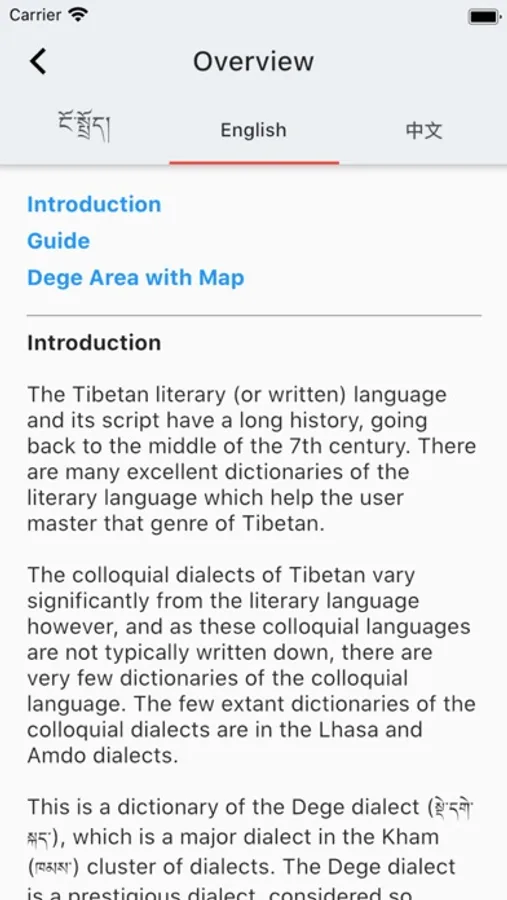
The Tibetan literary (or written) language and its script have a long history, going back to the middle of the 7th century. There are many excellent dictionaries of the literary language which help the user master that genre of Tibetan.
Learn the spoken language:
The colloquial dialects of Tibetan vary significantly from the literary language, and as these colloquial languages are not typically written down, there are very few dictionaries of the colloquial language. The few extant dictionaries of the colloquial dialects are in the Lhasa and Amdo dialects.
This is a dictionary of the Dege dialect, which is a major dialect in the Kham cluster of dialects. The Dege dialect is a prestigious dialect, considered so because of its close relationship to literary Tibetan.
Recordings and phonetics to help with pronunciation:
This dictionary is not intended to replace the literary language dictionaries. Its primary purpose is to aid non-native speakers of the Dege dialect to learn to speak this dialect. It uses the Tibetan script to write the language down, and the phonetic transcription and the recordings are there to aid the learner in pronouncing the words.
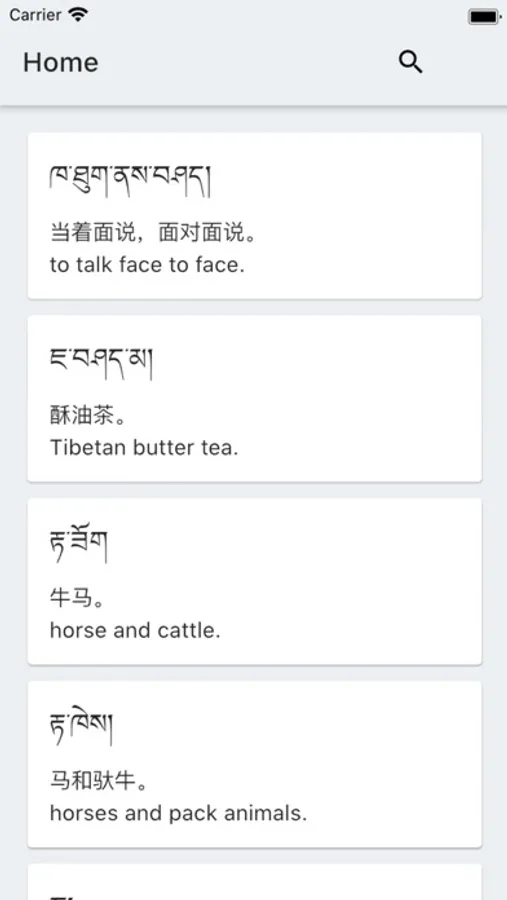
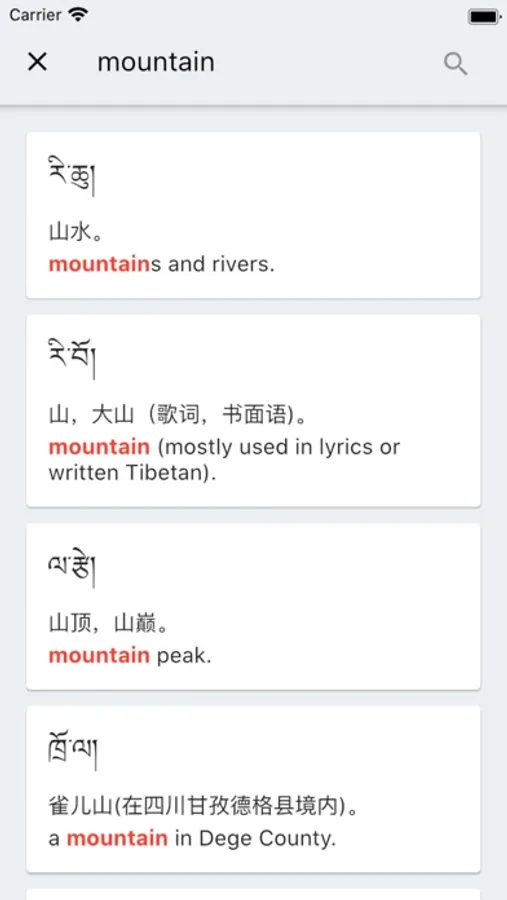
- Trilingual Tibetan - Chinese - English dictionary
- Search for words in all 3 languages
- Search history
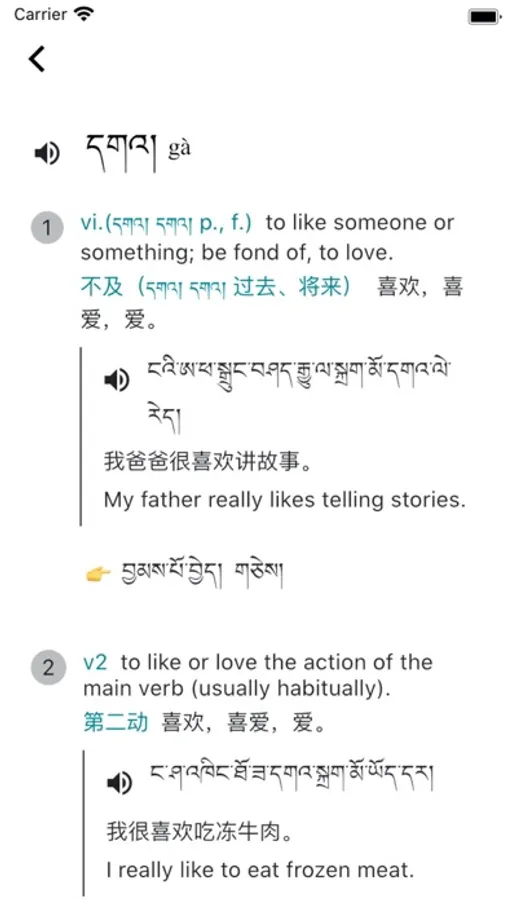
- Parts of speech
- Definitions, example sentences
- Phonetic spelling using International Phonetic Alphabet (IPA)
- Audio recordings for words and example sentences
- Guide to understanding the Dege dialect
- Reference of phonology and verbs
The Tibetan literary (or written) language and its script have a long history, going back to the middle of the 7th century. There are many excellent dictionaries of the literary language which help the user master that genre of Tibetan.
Learn the spoken language:
The colloquial dialects of Tibetan vary significantly from the literary language, and as these colloquial languages are not typically written down, there are very few dictionaries of the colloquial language. The few extant dictionaries of the colloquial dialects are in the Lhasa and Amdo dialects.
This is a dictionary of the Dege dialect, which is a major dialect in the Kham cluster of dialects. The Dege dialect is a prestigious dialect, considered so because of its close relationship to literary Tibetan.
Recordings and phonetics to help with pronunciation:
This dictionary is not intended to replace the literary language dictionaries. Its primary purpose is to aid non-native speakers of the Dege dialect to learn to speak this dialect. It uses the Tibetan script to write the language down, and the phonetic transcription and the recordings are there to aid the learner in pronouncing the words.
- Trilingual Tibetan - Chinese - English dictionary
- Search for words in all 3 languages
- Search history
- Parts of speech
- Definitions, example sentences
- Phonetic spelling using International Phonetic Alphabet (IPA)
- Audio recordings for words and example sentences
- Guide to understanding the Dege dialect
- Reference of phonology and verbs
Dege Kham Dialect Dictionary Screenshots
Tap to Rate:
Reviews for Dege Kham Dialect Dictionary
Chinarunner
The best app for Tibetan
This app for colloquial Kham Tibetan is a gift to the world of linguistics. Scholars interested in Tibeto-Burmese languages will find it an extremely helpful tool. Travelers to China’s eastern Tibetan plateau will also benefit from its easily navigable and elegant interface.