AppRecs review analysis
AppRecs rating 4.7. Trustworthiness 80 out of 100. Review manipulation risk 27 out of 100. Based on a review sample analyzed.
★★★★☆
4.7
AppRecs Rating
Ratings breakdown
5 star
69%
4 star
31%
3 star
0%
2 star
0%
1 star
0%
What to know
✓
Low review manipulation risk
27% review manipulation risk
✓
Credible reviews
80% trustworthiness score from analyzed reviews
✓
High user satisfaction
69% of sampled ratings are 5 stars
About Hoarding Test
Compulsive hoarding AKA hoarding disorder is a pattern of excessive acquisition of and an unwillingness to discard large volumes of items that cover the living areas of the home and cause significant distress and impairment.
Hoarding is not necessarily collecting - collectors often search specific items with high subjective value with a common theme and organize them meticulously. Hoarders often keep items with no true meaning and are disorganized.
The [DSM-5](https://en.wikipedia.org/wiki/DSM-5) diagnostic criteria for hoarding disorder are:
Persistent difficulty discarding or parting with possessions, regardless of the value others may attribute to these possessions.
This difficulty is due to strong urges to save items and/or distress associated with discarding.
The symptoms result in the accumulation of a large number of possessions that fill up and clutter active living areas of the home or workplace to the extent that their intended use is no longer possible. If all living areas become decluttered, it is only because of the [interventions](https://en.wikipedia.org/wiki/Intervention_(counseling)) of third parties (e.g., family members, cleaners, authorities).
The symptoms cause clinically significant distress or impairment in social, occupational, or other important areas of functioning (including maintaining a safe environment for self and others).
The hoarding symptoms are not due to a general medical condition (e.g., brain injury, cerebrovascular disease).
The hoarding symptoms are not restricted to the symptoms of another mental disorder
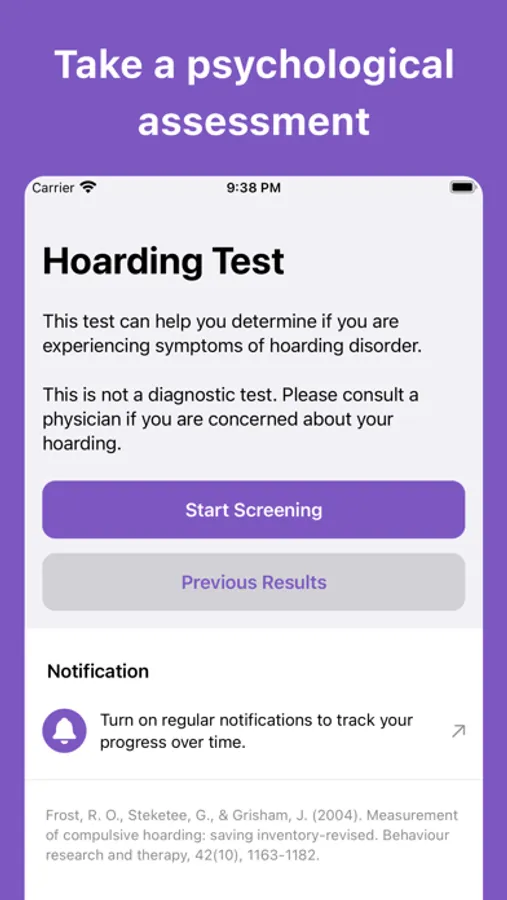
Disclaimer: This test is NOT a diagnostic test. A diagnosis can only be provided by a qualified healthcare professional. Please consult a physician or mental health professional if you are concerned about your mental health.
Frost, R. O., Steketee, G., & Grisham, J. (2004). Measurement of compulsive hoarding: saving inventory-revised. Behaviour research and therapy, 42(10), 1163-1182.
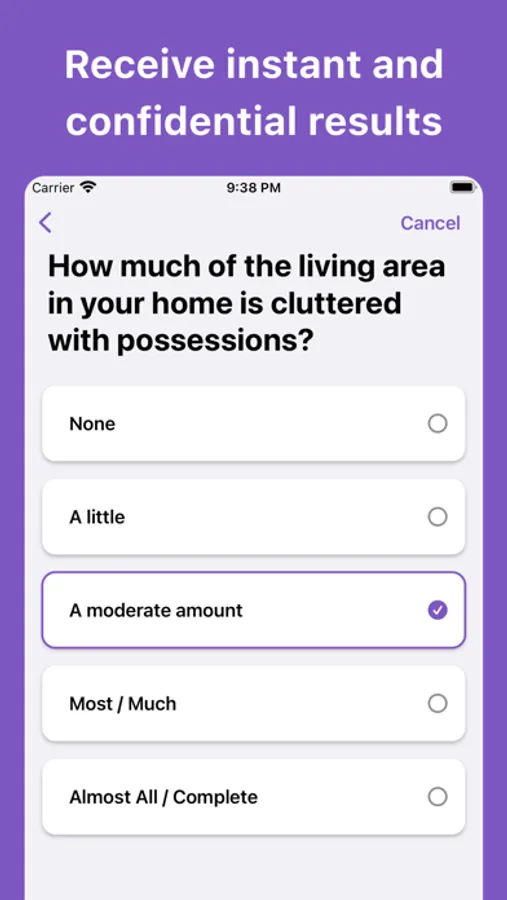
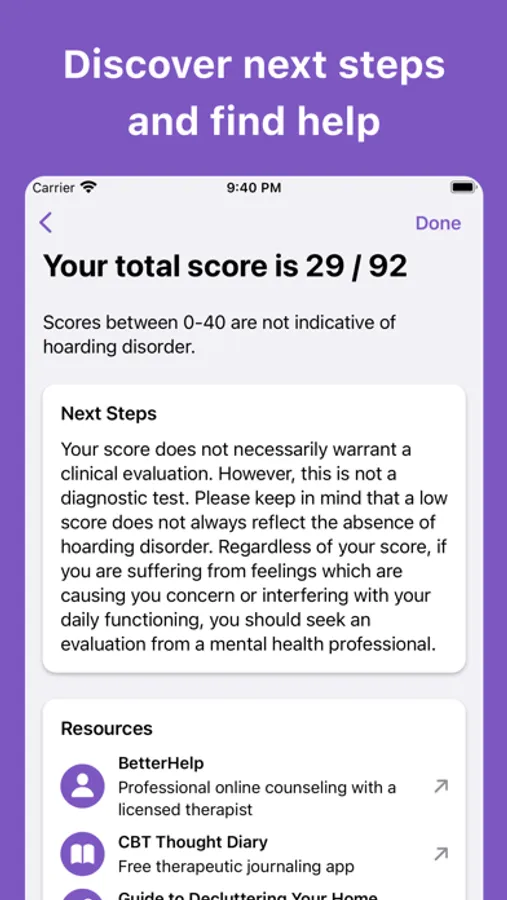
Hoarding Test Screenshots
Tap to Rate:
Reviews for Hoarding Test
soprano 1/2
If the app actually worked..,
I have been trying to take the quiz. Each time I respond and tap “continue,” it goes back to ALL of my previous responses. When I tapped App Support, it takes me to the company’s home page that not only provides no help, it doesn’t even list this app. I stopped the quiz after about the 10th question because it was a waste of time to keep tapping “continue” over and over just to get to the newest question. The idea is wonderful; the app is not.
TDRates
Simple and Resourceful
Simple, quick results and referral to resources (some of which were free and really helpful).