AppRecs review analysis
AppRecs rating 2.8. Trustworthiness 74 out of 100. Review manipulation risk 22 out of 100. Based on a review sample analyzed.
★★☆☆☆
2.8
AppRecs Rating
Ratings breakdown
5 star
22%
4 star
15%
3 star
22%
2 star
7%
1 star
33%
What to know
✓
Low review manipulation risk
22% review manipulation risk
✓
Credible reviews
74% trustworthiness score from analyzed reviews
⚠
Mixed user feedback
Average 2.9★ rating suggests room for improvement
About BiliCalc
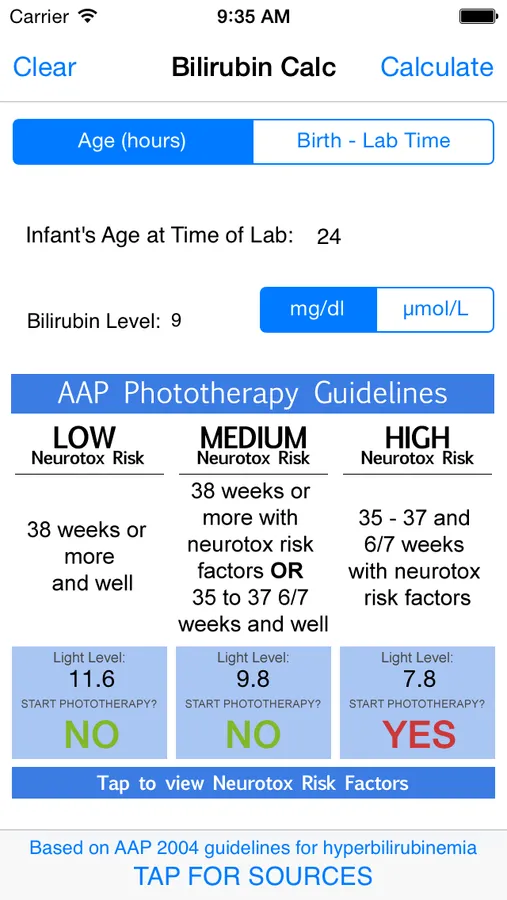
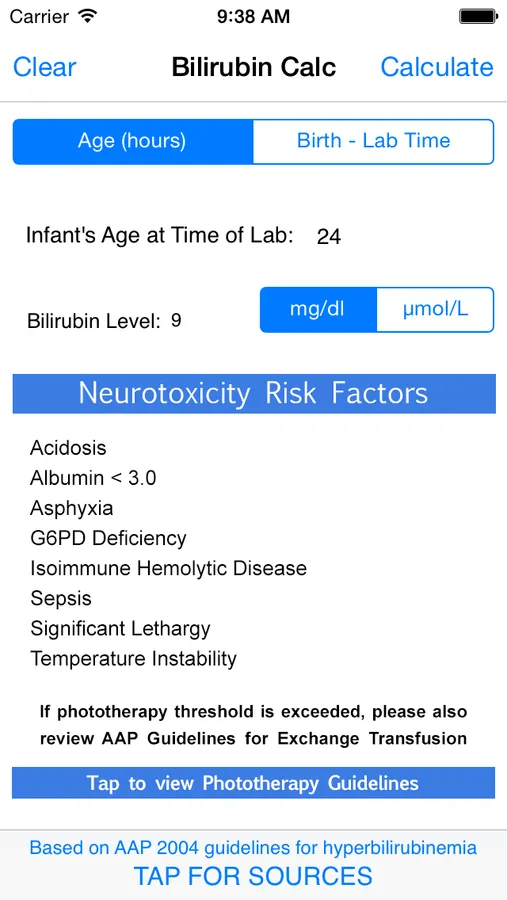
Allows direct age input and includes the option to calculate age from birth and lab sample times. The app has a direct link to source journal articles, nomograms, and a list of the neurotoxicity risk factors. Supports US and SI units (mg/dL and µmol/L).
App Feature Summary
-Calculates phototherapy threshold for newborns 35 weeks and older
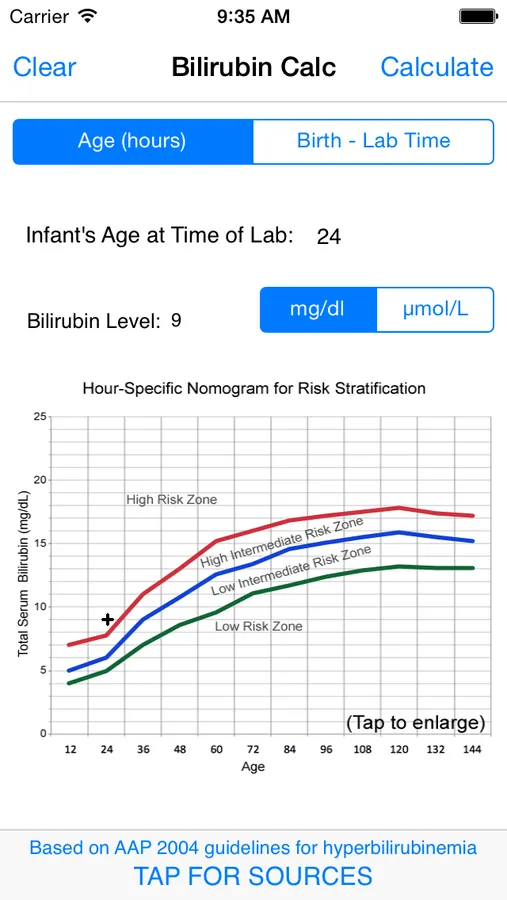
-Displays values on phototherapy nomogram
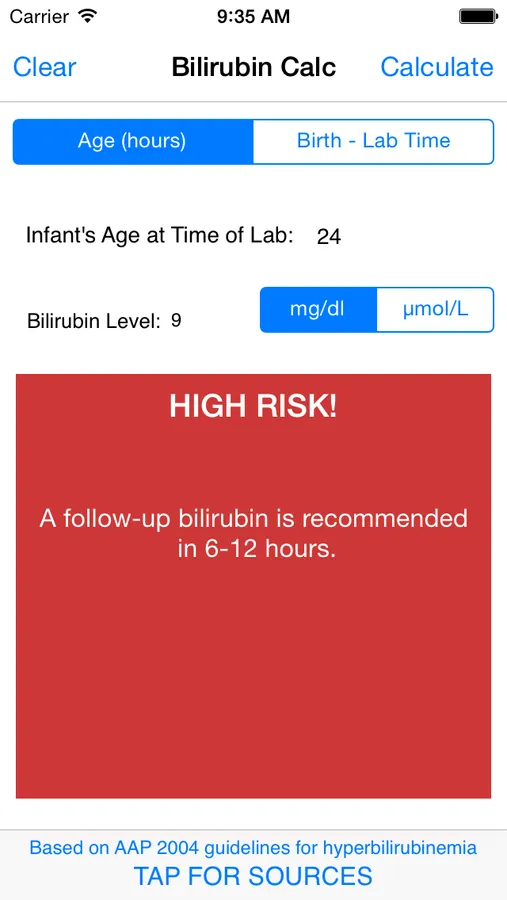
-Suggests time frame for followup bilirubin levels based on patient risk zone
-Direct links to reference journal articles
**********************************
Frequently Asked Questions
**********************************
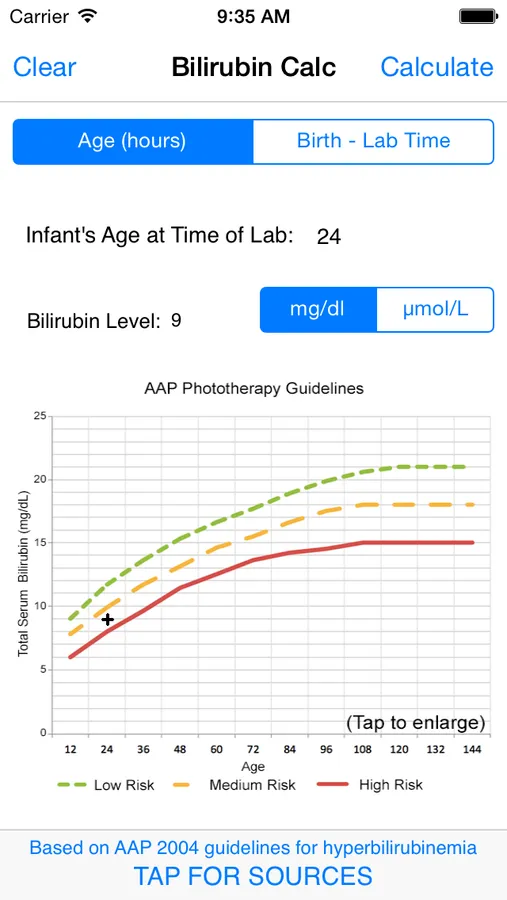
1. I think the graph is backwards. Why is low risk on top and high risk on bottom?
The graph is directly from the 2004 AAP Hyperbilirubinemia Guidelines. The degree of "risk" refers to the infant's risk for developing neurotoxicity. This is different than the Bhutani Nomogram in which "risk" refers to the risk for development of severe hyperbilirubinemia. The threshold for treatment (when a data point lies above one of the lines on the graph) of the infant is different based on the predisposing factors (divided into the three risk categories). Babies who are "low neurotoxicity risk," can tolerate higher levels of bilirubin than a baby with medium or high risk. Therefore, a high risk baby will be treated at lower bilirubin levels than a low risk baby. The graph is correct in having low risk on top since a higher value is needed to pass the threshold for treatment (phototherapy). Please see the graph here for verification as well: http://bit.ly/AppPWU. Please email if you have further questions.
******************************************
Intended for use by pediatricians, neonatologists, physicians, medical students, and pediatric nurses who treat newborn infants in the hospital and as outpatients.
BiliCalc should be used only as a reference aid. The information contained in the app should not be used as a substitute for the exercise of professional clinical judgement. Please contact the developer if you find any errors.
Keywords: bilitool, bilitool.org, jaundice, hyperbiliubinemia
BiliCalc Screenshots
Tap to Rate:
Reviews for BiliCalc
Agmh33
Not up to date guidelines
It’s a great app and easy to use but needs to be updated to the 2022 guidelines.
The Slither Master
Used to be a 5star app
The app still uses the old 2004 AAP guidelines and has not been updated to the 2022 guidelines. It appears to be effectively abandoned by the owner. There are other alternatives on the App Store. Is the app still functional? Yes… but it is no longer pertinent