AppRecs review analysis
AppRecs rating . Trustworthiness 65 out of 100. Review manipulation risk 28 out of 100. Based on a review sample analyzed.
★
AppRecs Rating
Ratings breakdown
5 star
0%
4 star
0%
3 star
0%
2 star
0%
1 star
100%
What to know
✓
Low review manipulation risk
28% review manipulation risk
⚠
Mixed user feedback
Average 1.0★ rating suggests room for improvement
About PFT eval
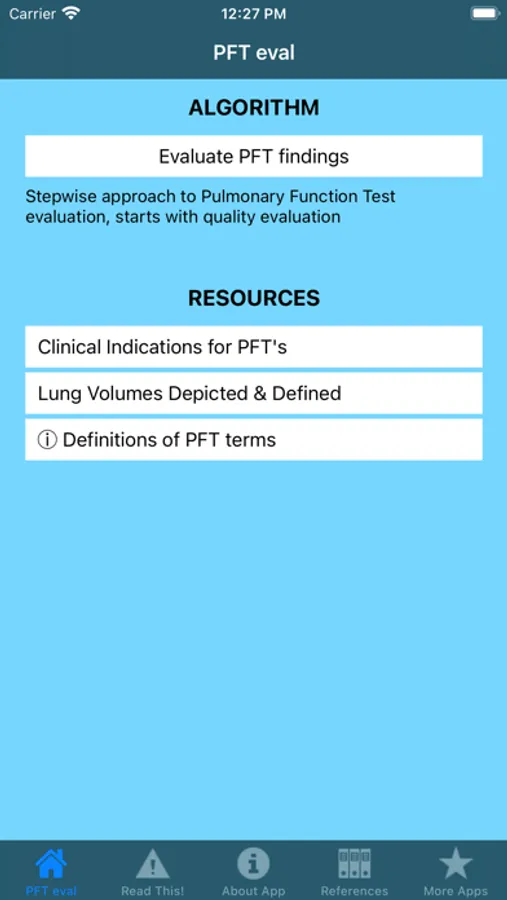
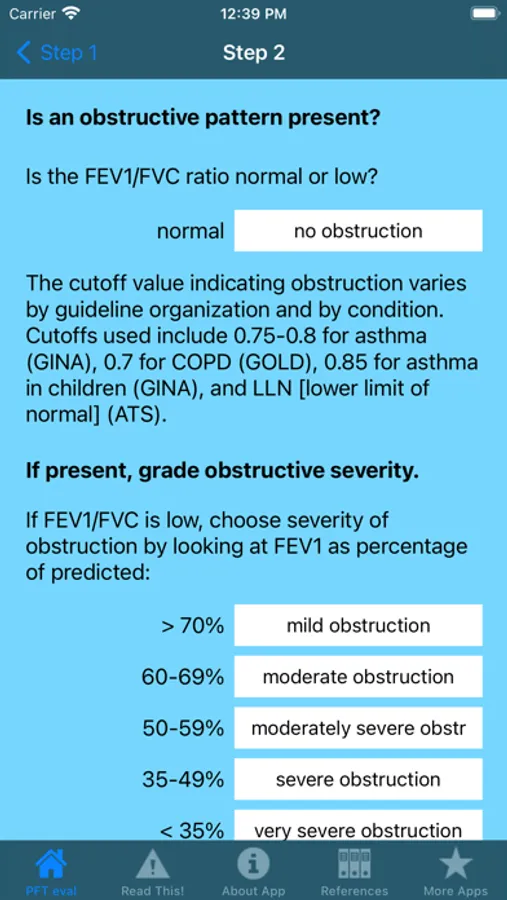
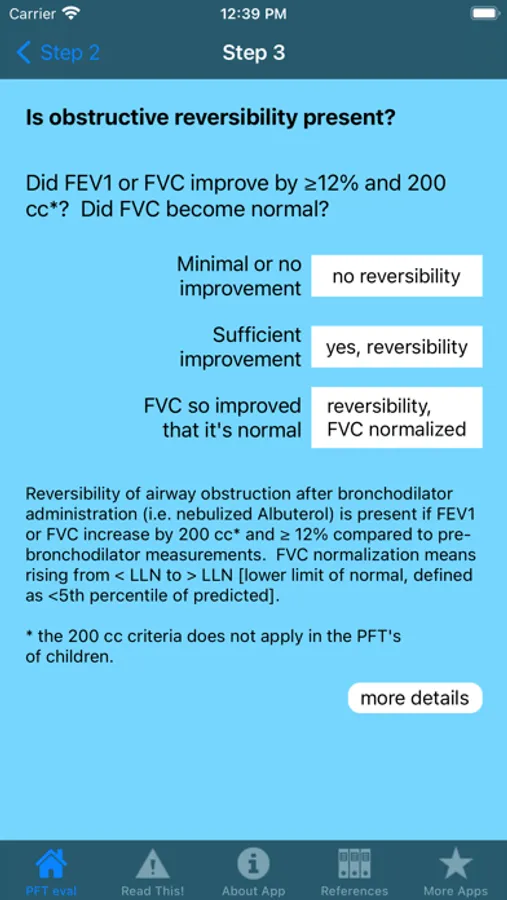
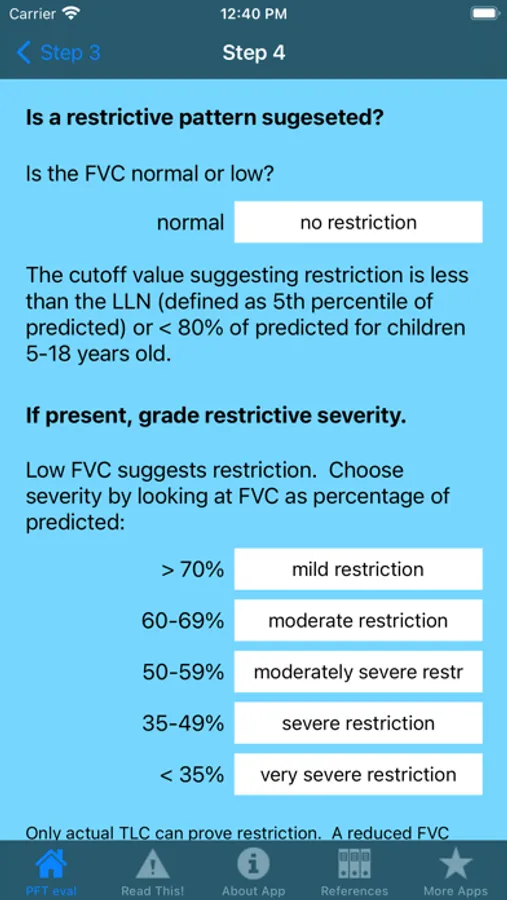
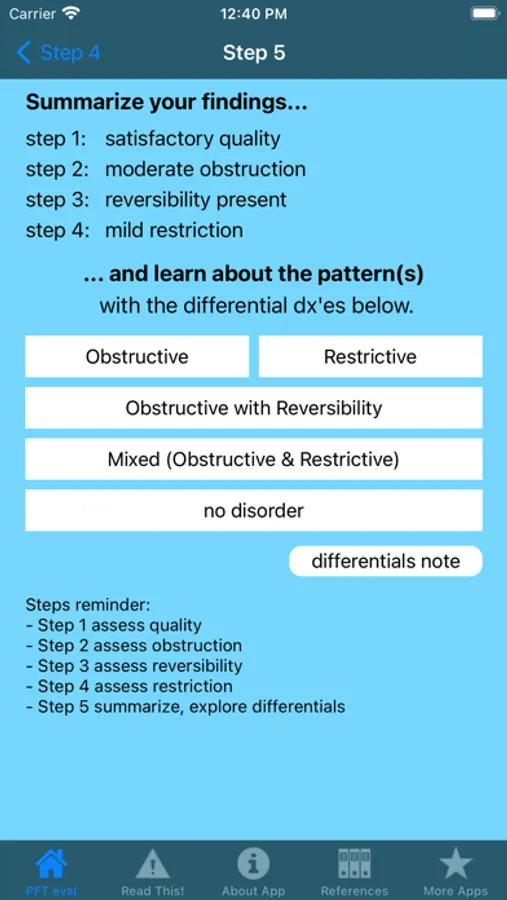
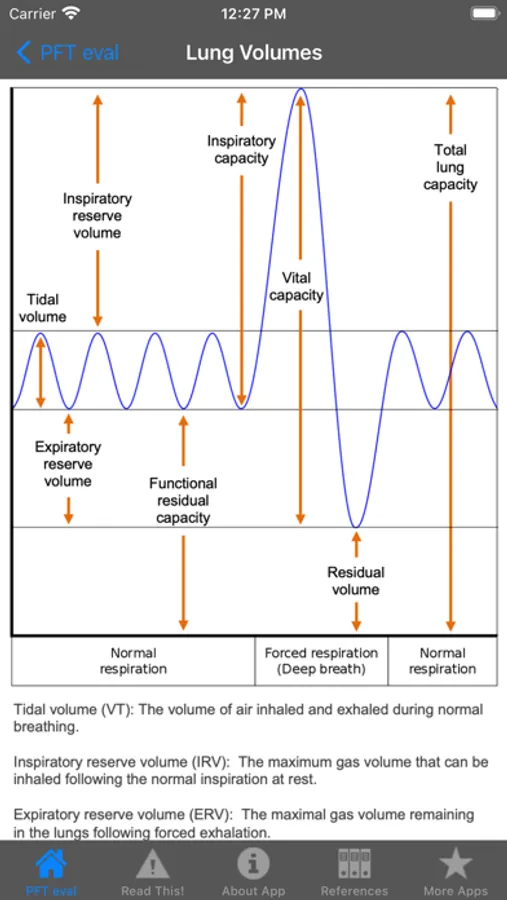
PFT eval walks a clinician through a quick simple stepwise approach to analyse Pulmonary Function Tests (PFT's) in order to arrive at ventilation and respiration disorders and diagnostic ideas about patients. It is based upon several evaluation protocols in the medical literature. This tool not only yields answers, but just as importantly teaches the stepwise thinking process to arrive at answers along the way. A clinician or learner will wind up with good information that assists patient care and should wind up a little smarter and more able to do it with less assistance the next time. It is a great support for those of us clinicians who use these tests only occasionally and don't have it memorized. The differential diagnoses are then offered for the various findings of obstructive patterns, restrictive patterns, airway obstruction reversibility, etc.
The app addresses such common questions as:
•What are the standard cutoffs for mild obstruction, severe restriction, etc.?
•How do I assess the quality of the PFT efforts before drawing diagnostic conclusions from them?
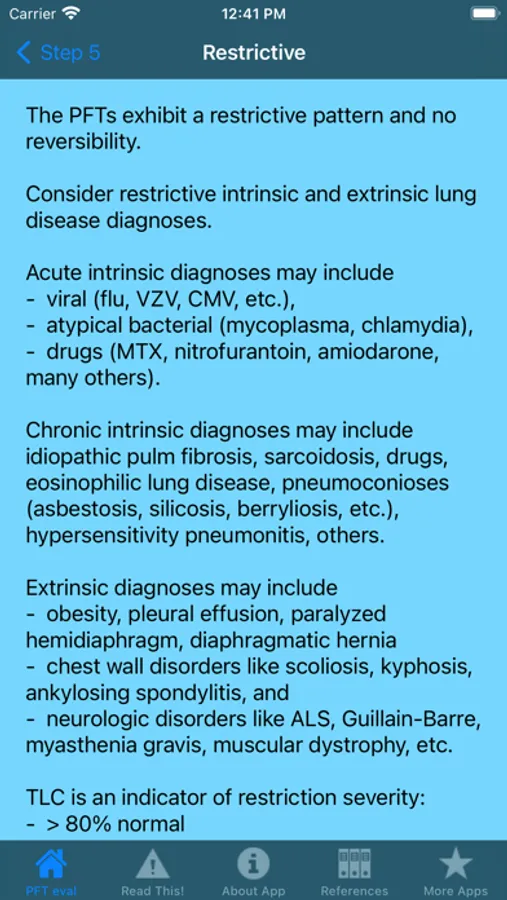
•What are common causes of acute and chronic restrictive lung disease?
•When could one consider methacholine challenge testing?
•What's the difference between intrinsic and extrinsic restrictive lung disease and what are typical differentials?
This app is written and intended for practicing clinicians like internists, family physicians, and pediatricians; for resident physician trainees; for medical students; and of course for other clinician colleagues like NP's and PA's. As an educator and clinician, I am interested in feedback and I would be grateful for guidance on improving the tool.
The app addresses such common questions as:
•What are the standard cutoffs for mild obstruction, severe restriction, etc.?
•How do I assess the quality of the PFT efforts before drawing diagnostic conclusions from them?
•What are common causes of acute and chronic restrictive lung disease?
•When could one consider methacholine challenge testing?
•What's the difference between intrinsic and extrinsic restrictive lung disease and what are typical differentials?
This app is written and intended for practicing clinicians like internists, family physicians, and pediatricians; for resident physician trainees; for medical students; and of course for other clinician colleagues like NP's and PA's. As an educator and clinician, I am interested in feedback and I would be grateful for guidance on improving the tool.
PFT eval Screenshots
Tap to Rate:
Reviews for PFT eval
MisterObvious
Doesn't work, just like his prepeval app
Opens but touching screen doesn't do anything, just like Preopeval ever since recent iOS. Note that a newer app, PreopEval14 does work.